
Last updated September 23, 2026
Free visual inspection and a written scope of work before any mitigation begins - photos, moisture readings, and drying logs go in your claim file
The scope we write is the scope we bill. Anything new gets shown to you, in writing, before we touch it.
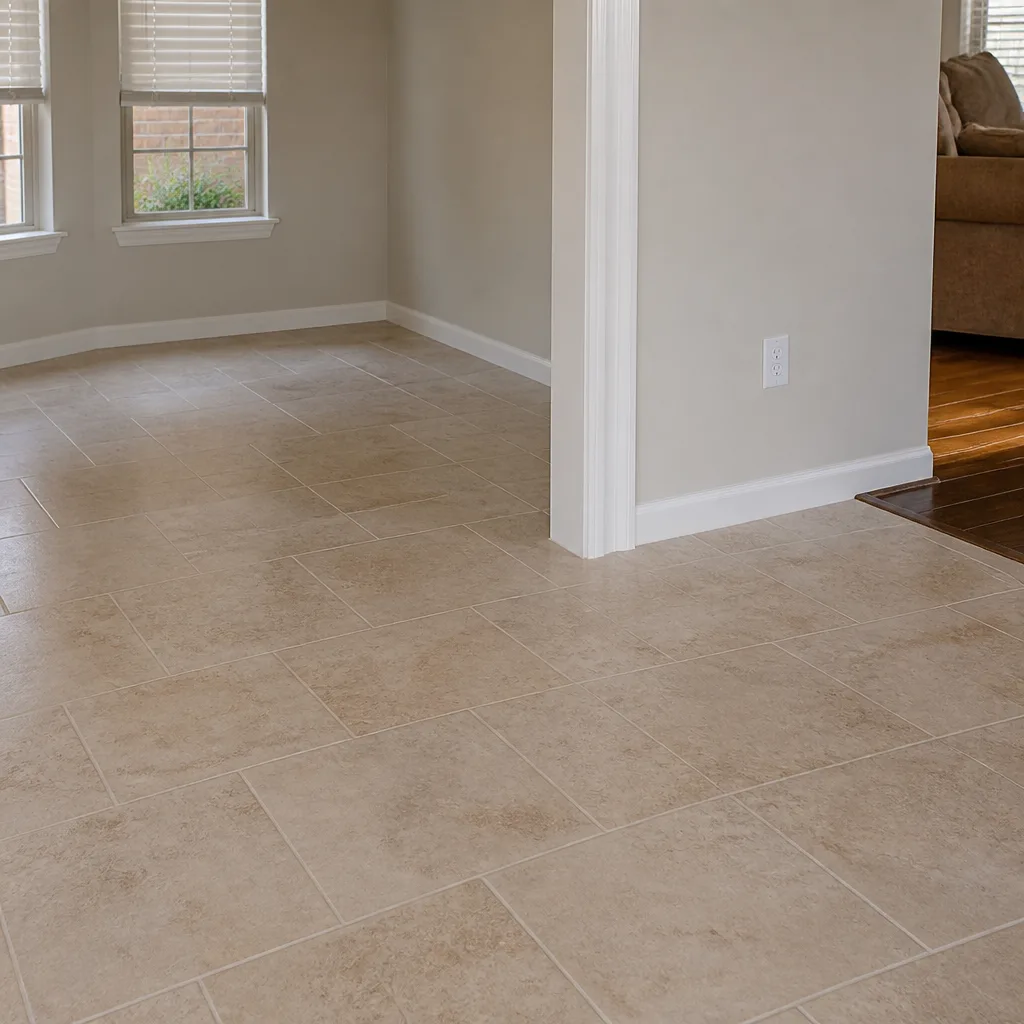

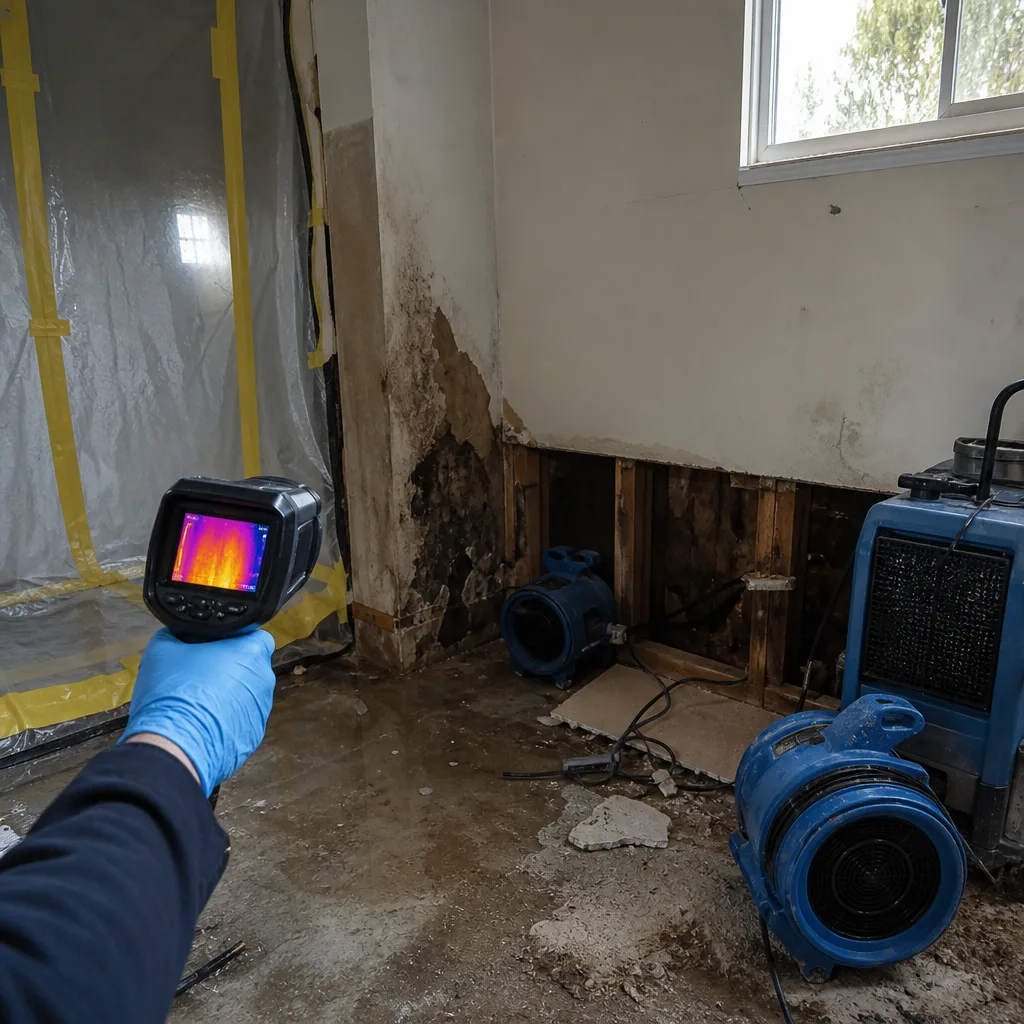 Before
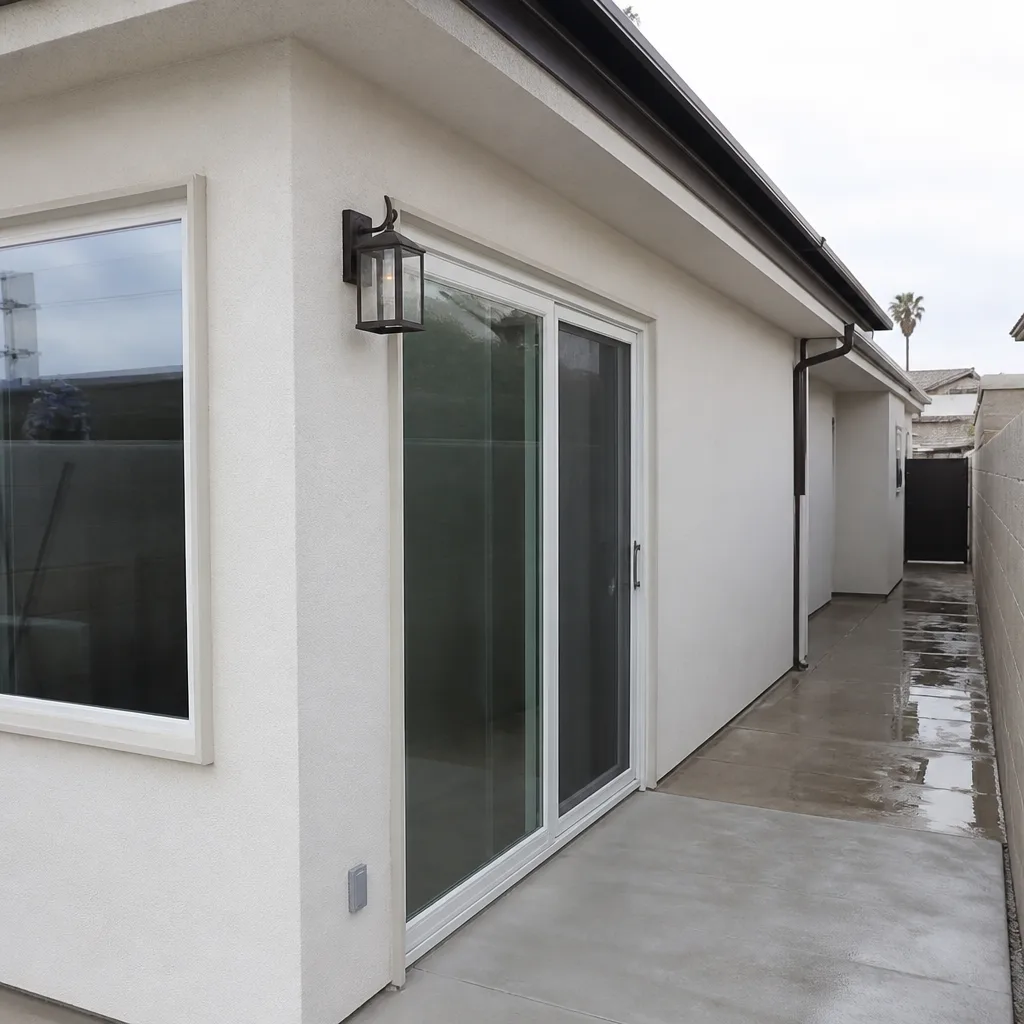 After
After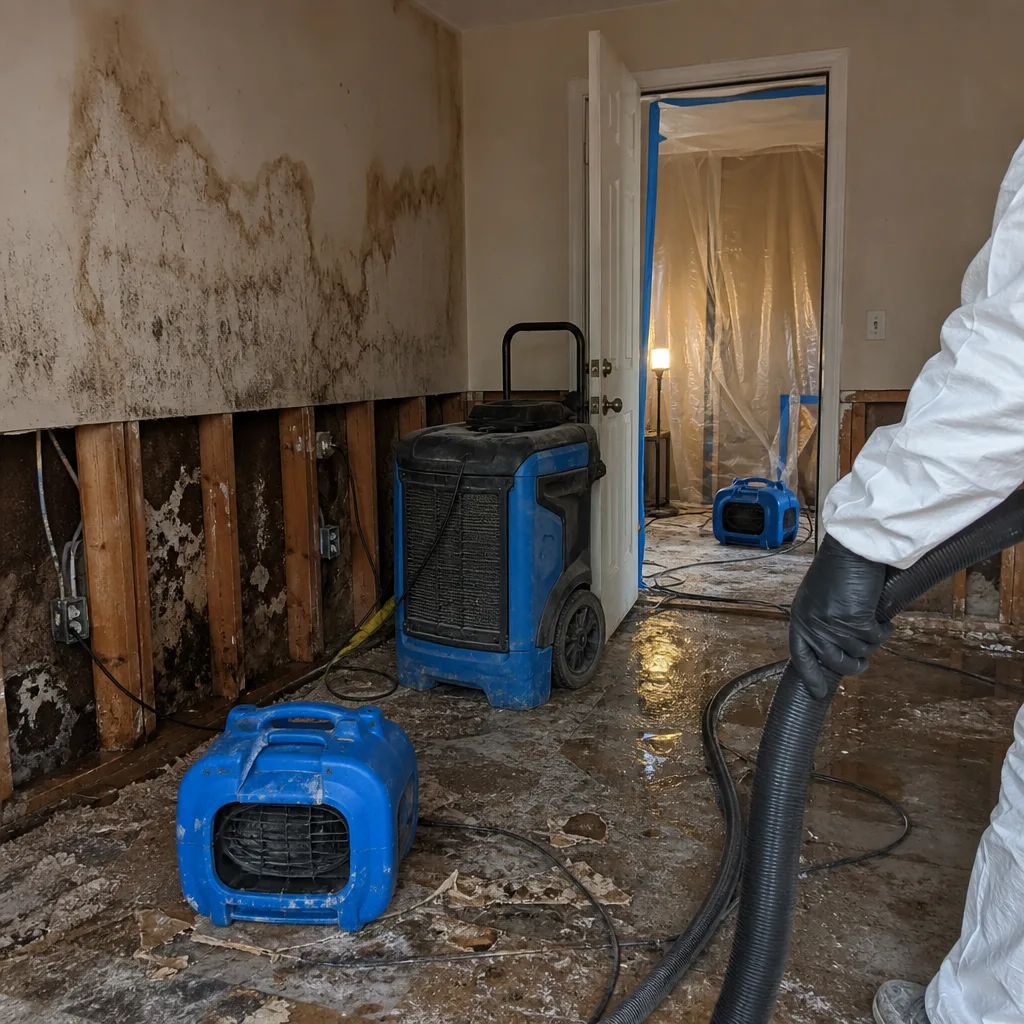 Before
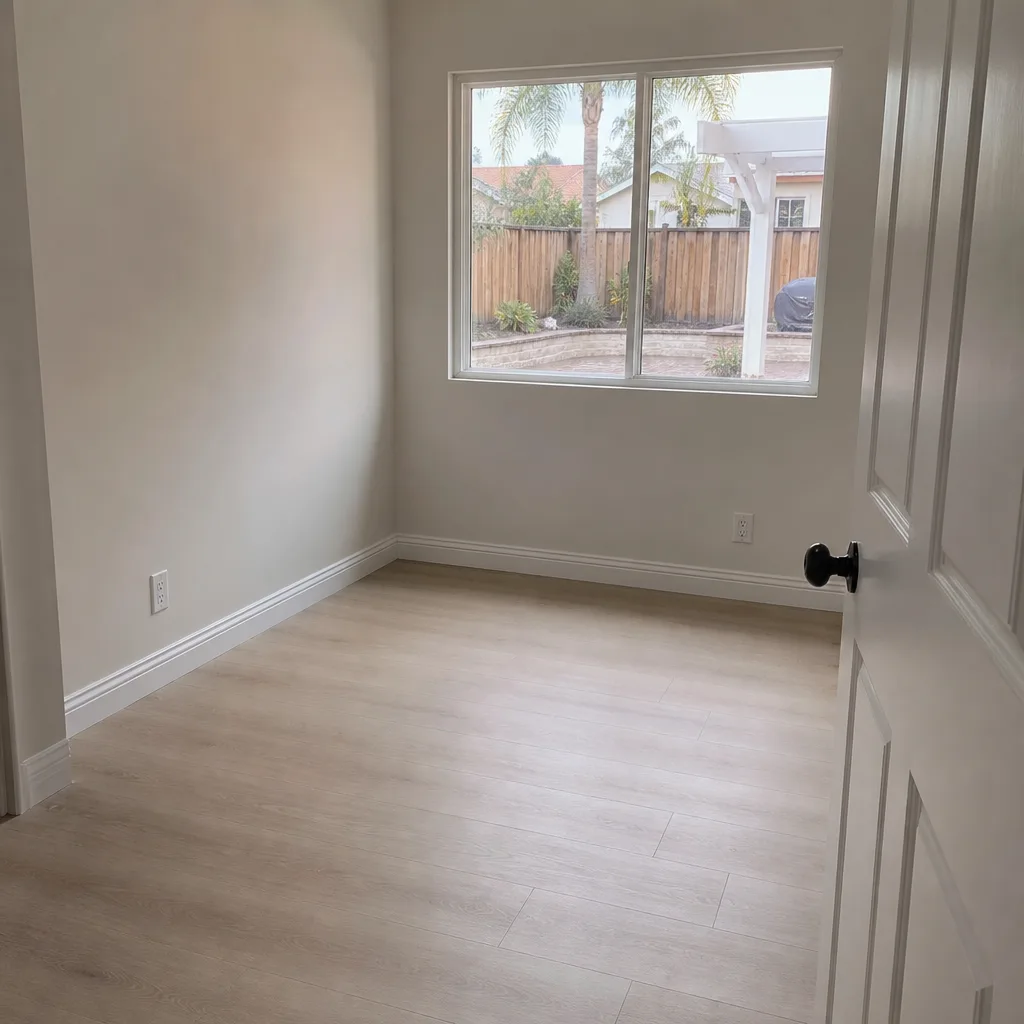 After
After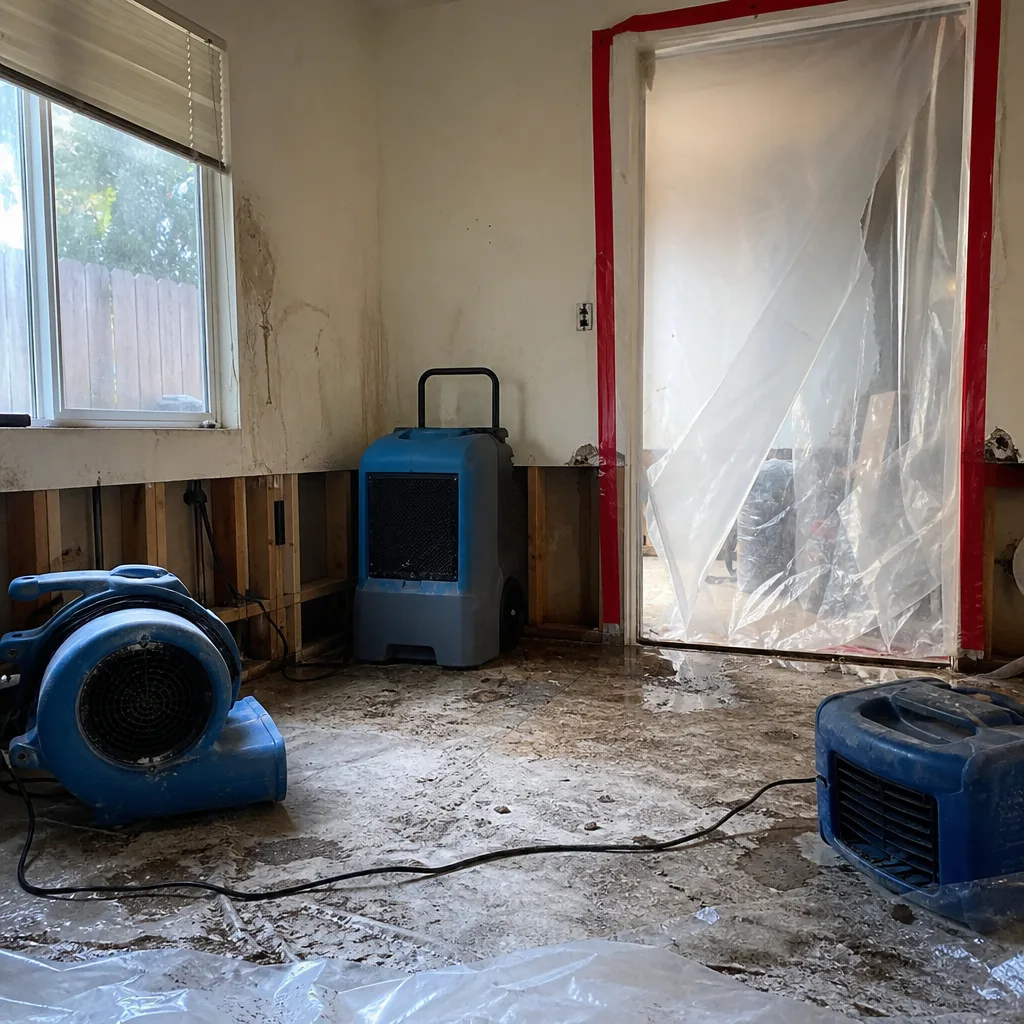 Before
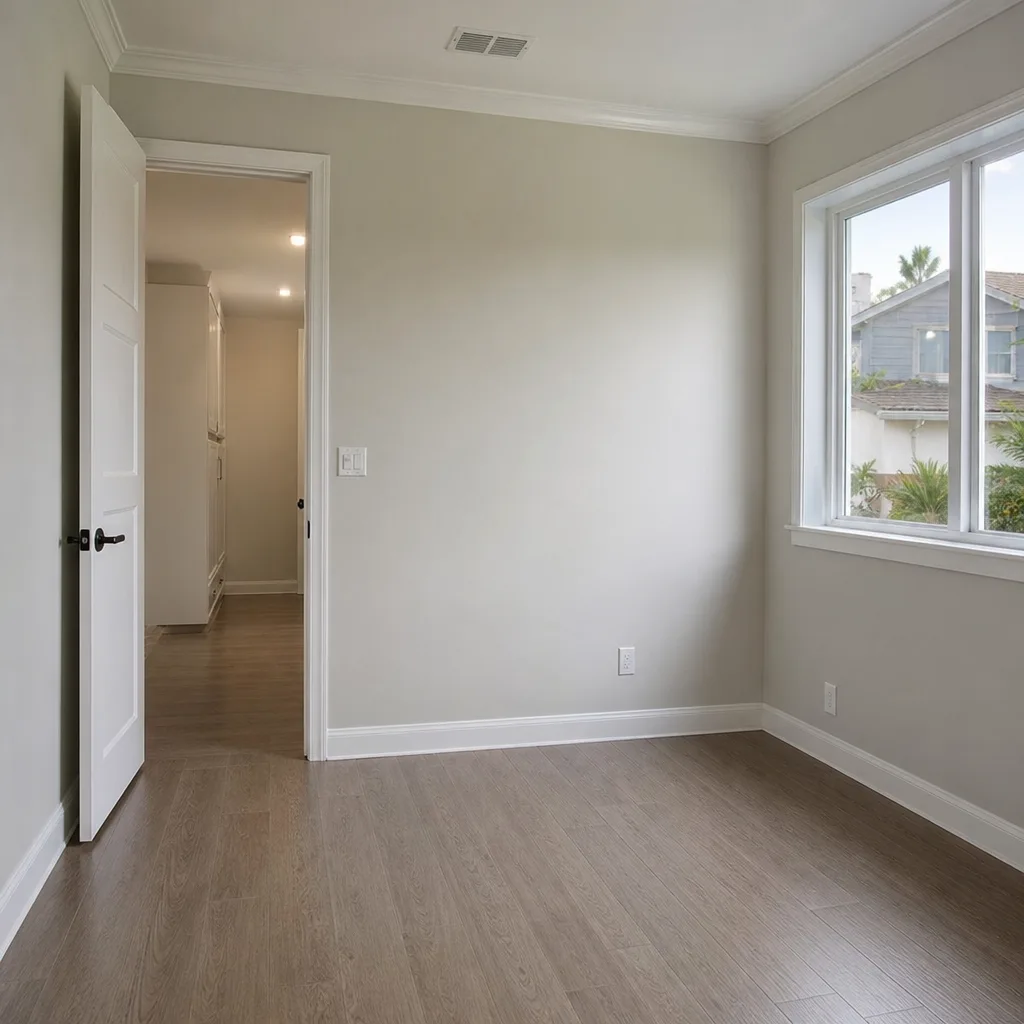 After
AfterDIY vs Professional Damage Restoration: The Huntington Beach Homeowner’s Decision Guide
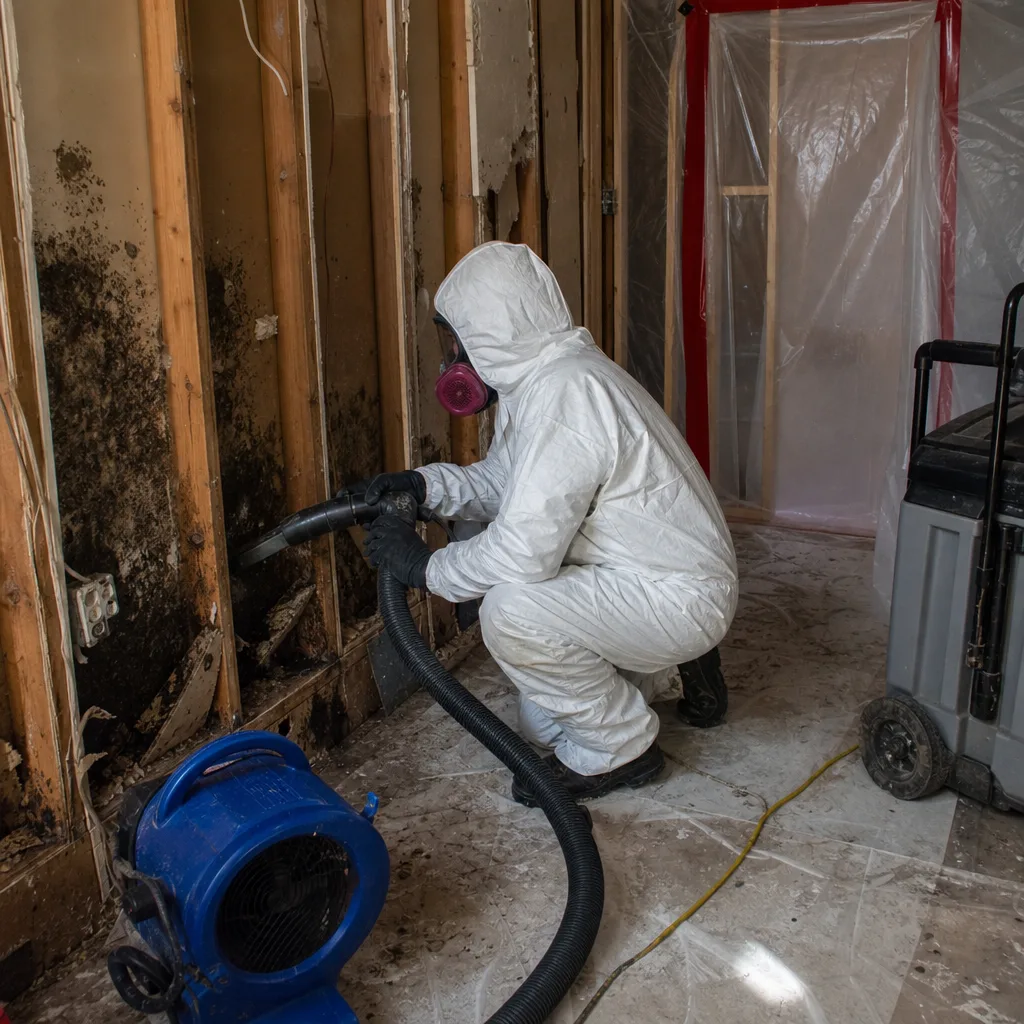
A Huntington Beach homeowner extracted standing water themselves, dried the room with box fans, and considered the problem solved - until mold appeared inside the wall cavity six weeks later and their insurer denied the remediation claim because no professional moisture readings existed to establish original drying completion. This happens more often than most homeowners realize. In our experience at DryMark Restoration Huntington Beach home, the DIY-versus-professional decision in restoration is not a question of skill. It is a question of what the homeowner needs to prove afterward. DIY restoration produces no documentation, and undocumented restoration is the single most common reason California insurers deny secondary damage claims. This guide will show you which tasks you can safely handle yourself, which ones carry claim-ending risk, and how to protect your eligibility if you do start the work before calling a professional.
Quick Answer
Most Huntington Beach homeowners can safely handle surface water removal on sealed concrete, content inventory, and initial humidity control with a rated dehumidifier. Anything requiring moisture verification inside walls, ceilings, or subfloors should involve a professional with calibrated meters and IICRC documentation, because California insurers routinely deny secondary damage claims that lack written drying logs and photo records. The cost difference between DIY and professional mitigation for a typical Category 1 water loss is often smaller than the deductible on a denied mold or structural claim.
Table of Contents
- Why Documentation Matters More Than Skill
- What DIY Can Handle Safely
- The IICRC Standards That Determine “Dry”
- California Legal Liability for Undocumented Remediation
- Actual Cost Comparison: DIY vs Professional
- How to DIY Without Voiding Your Claim
- Equipment Rental vs Professional-Grade Drying
- Common Mistakes to Avoid
- When to Call a Professional
- Frequently Asked Questions
- The Bottom Line
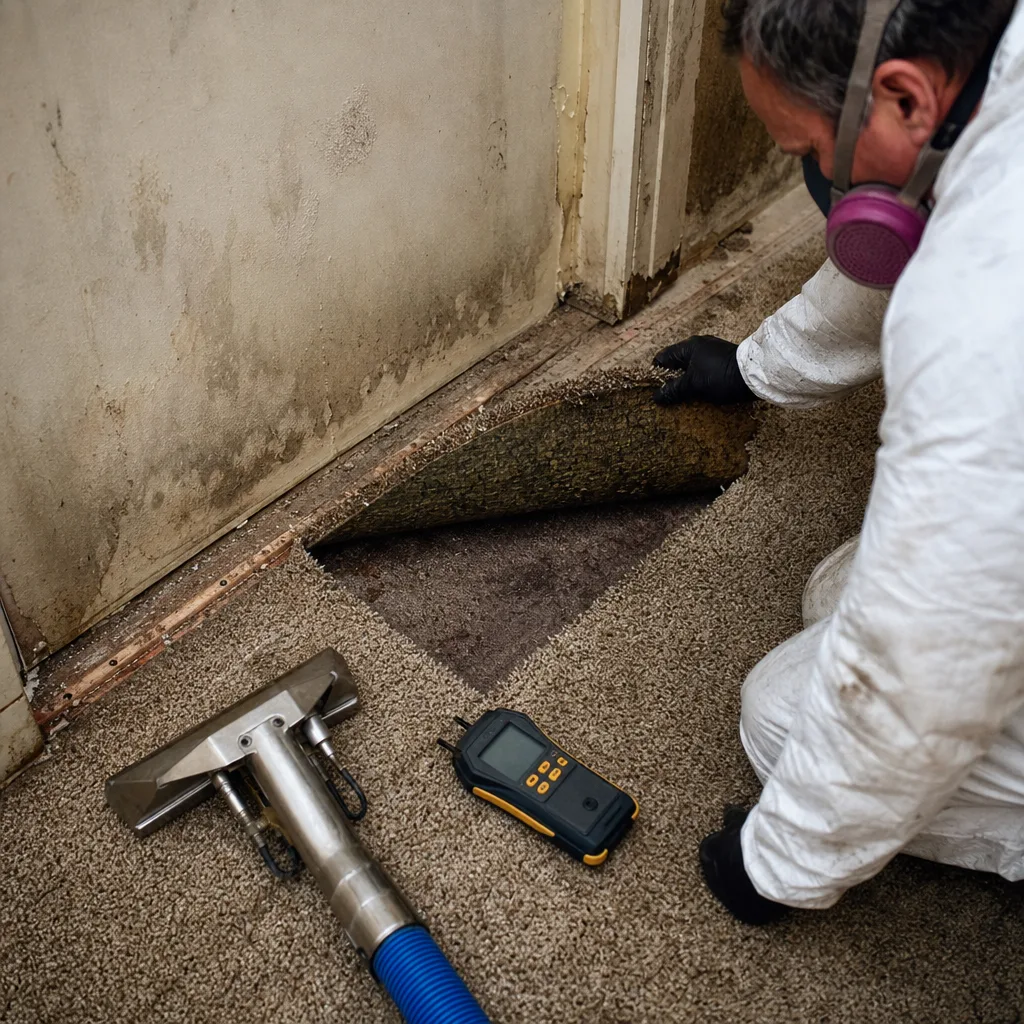
 Before
 After
AfterWhy Documentation Matters More Than Skill
We have restored over 12,000 homes since 2011, and the pattern is consistent. The homeowner who calls us six months after a DIY drying attempt is rarely dealing with the original water damage. They are dealing with mold, buckled flooring, or compromised structural members - and an insurance adjuster who points to the lack of documentation as grounds for denial.
California operates on a principle of documented causation for secondary damage claims. An insurer will pay for mold remediation that results from a covered water loss, but only if the policyholder can prove the mold arose from that specific event and that reasonable mitigation was attempted. A box fan and a wet-dry vacuum do not constitute reasonable mitigation in the eyes of most carriers. What does: a written scope of work, daily moisture readings recorded to IICRC S500 standards, photographic documentation with timestamps, and a signed certificate of drying completion.
This is why we built our company around DryMark Restoration Huntington Beach home documentation. Alicia Brennan founded Back to Dry in 2011 after working as a claims adjuster and watching homeowners lose tens of thousands in coverage because they could not produce a moisture log. The Haven Standard, Clause 1, requires a written price before any work starts. But equally important is what follows: the daily drying log, the photo record on every visit, and the 365-Day Done Right Promise backed by a signed guarantee. These documents turn restoration invoices into payable claims.
For Huntington Beach homeowners specifically, seasonal damage restoration care matters because our coastal climate extends drying times. Morning marine layer keeps relative humidity elevated, especially in neighborhoods like Downtown Huntington Beach and Huntington Harbour where older construction lacks modern vapor barriers. A homeowner who thinks a room is dry because the carpet feels dry to the touch may miss elevated moisture in the subfloor that professional-grade meters would catch immediately.
What DIY Can Handle Safely
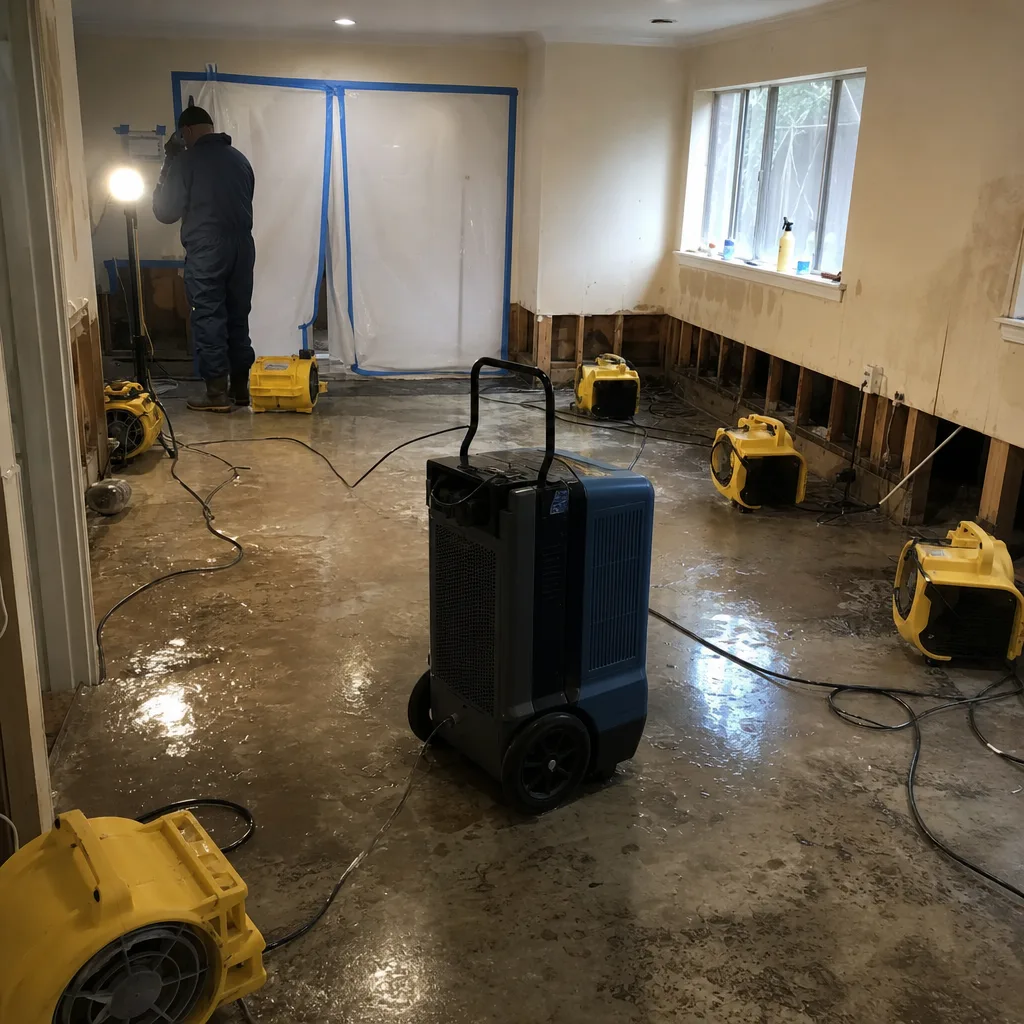
Not every water event requires professional intervention. Our water damage restoration maintenance checklist covers tasks where DIY is genuinely low-risk, provided you document everything:
- Surface water on sealed concrete. If clean water sits on a sealed garage floor, basement slab, or patio and has not migrated to walls or porous materials, extraction with a wet-dry vacuum and passive air movement is sufficient. Document the water source, the affected area in square feet, and the time of discovery with a photo.
- Single-room humidity control with a rated dehumidifier. A residential dehumidifier rated for the room’s cubic footage can maintain relative humidity below 60%, which inhibits mold growth. Record the starting humidity with a hygrometer, the equipment model and capacity, and daily readings until stable.
- Content removal and cataloguing. Moving affected items to a dry area, photographing each piece, and creating a written inventory with approximate age and replacement value preserves your personal property claim. This is tedious but not technically demanding, and it frees professional crews to focus on structural drying.
- Initial extraction of standing water. Removing water quickly limits migration and reduces the category of loss. A submersible pump or wet-dry vacuum used within the first few hours can prevent a Category 1 (clean water) loss from becoming Category 2 (gray water) through microbial amplification.
The key limitation: these tasks address what you can see. They do not verify what you cannot. And in restoration, what you cannot see - the moisture trapped behind baseboards, inside wall cavities, beneath tile - determines whether the job is actually done.
The IICRC Standards That Determine “Dry”
“It looks dry” is not a defensible standard for an insurer. The Institute of Inspection, Cleaning and Restoration Certification (IICRC) publishes S500, the standard for professional water damage restoration, which defines dry through measurable thresholds:
- Wood structural materials: Equilibrium moisture content (EMC) below 19%, verified with a pin-type moisture meter calibrated for the wood species. In Huntington Beach, where coastal humidity keeps baseline readings higher than inland markets, this typically requires active dehumidification beyond what residential units provide.
- Concrete and masonry: Moisture content below 4% when measured with a Tramex Concrete Moisture Encounter or equivalent impedance meter. Concrete appears dry at much higher moisture levels, and flooring installed over insufficiently dried concrete will fail within months.
- Air quality indicators: Relative humidity below 60% and specific humidity stable for 24 hours, measured with a psychrometric chart that accounts for temperature and vapor pressure differential (the force that drives moisture from wet materials into drier air).
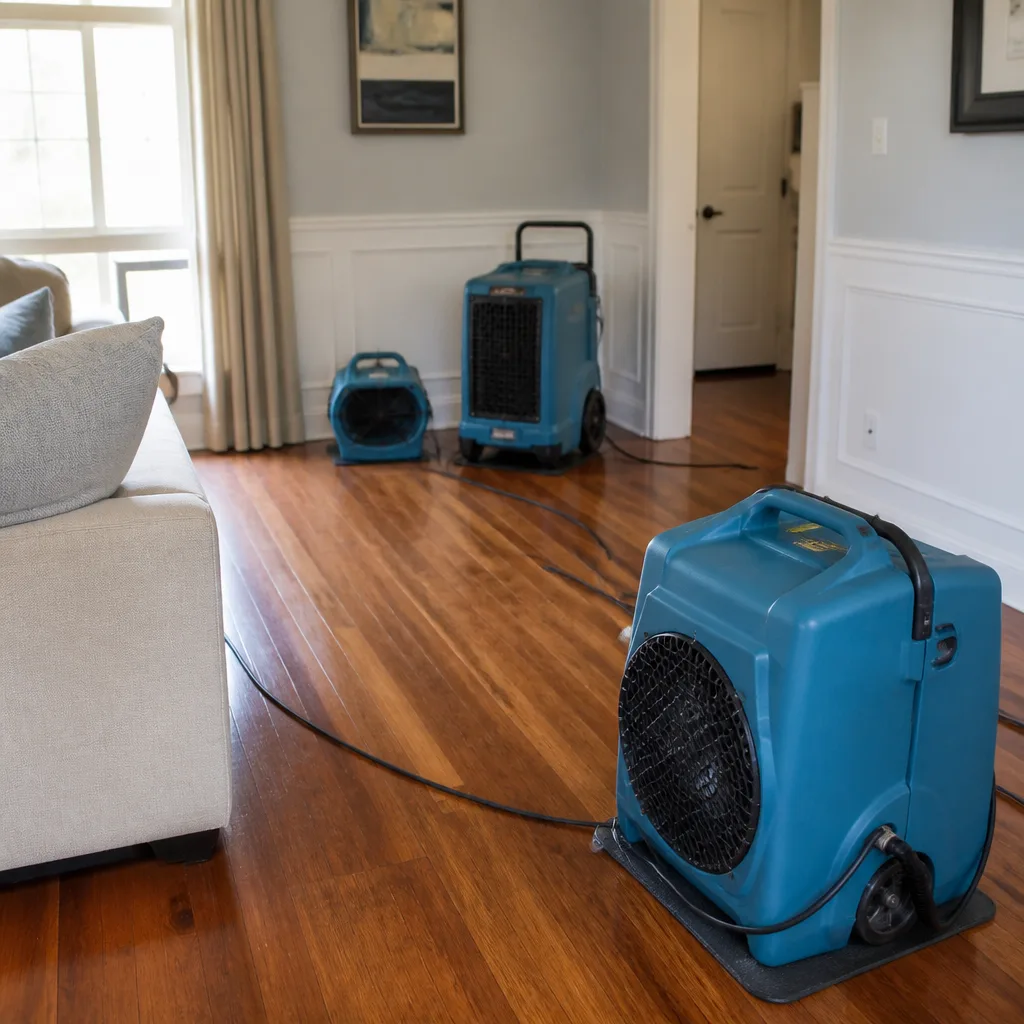
Professional-grade drying systems from Dri-Eaz, Phoenix, and XPOWER produce the airflow volume and dehumidification capacity to reach these thresholds. A residential box fan moves approximately 1,500 cubic feet per minute. A Dri-Eaz Velo Pro axial air mover moves 3,400 CFM with focused velocity that creates laminar airflow across wet surfaces, accelerating evaporation. The difference is not incremental; it is the difference between surface drying and structural drying.
More importantly, professional equipment is paired with calibrated measurement. We use Tramex meters, Delmhorst pin probes, and wireless hygrometers that log data automatically. This psychrometric data - temperature, relative humidity, specific humidity, and vapor pressure - forms the drying log that insurers require to prove a structure was returned to pre-loss condition.
In Huntington Beach specifically, we regularly see elevated readings in homes near the Bolsa Chica wetlands and along Pacific Coast Highway, where groundwater tables and salt air complicate drying. A homeowner without calibrated meters has no way to distinguish normal coastal humidity from residual moisture from a loss event.
California Legal Liability for Undocumented Remediation
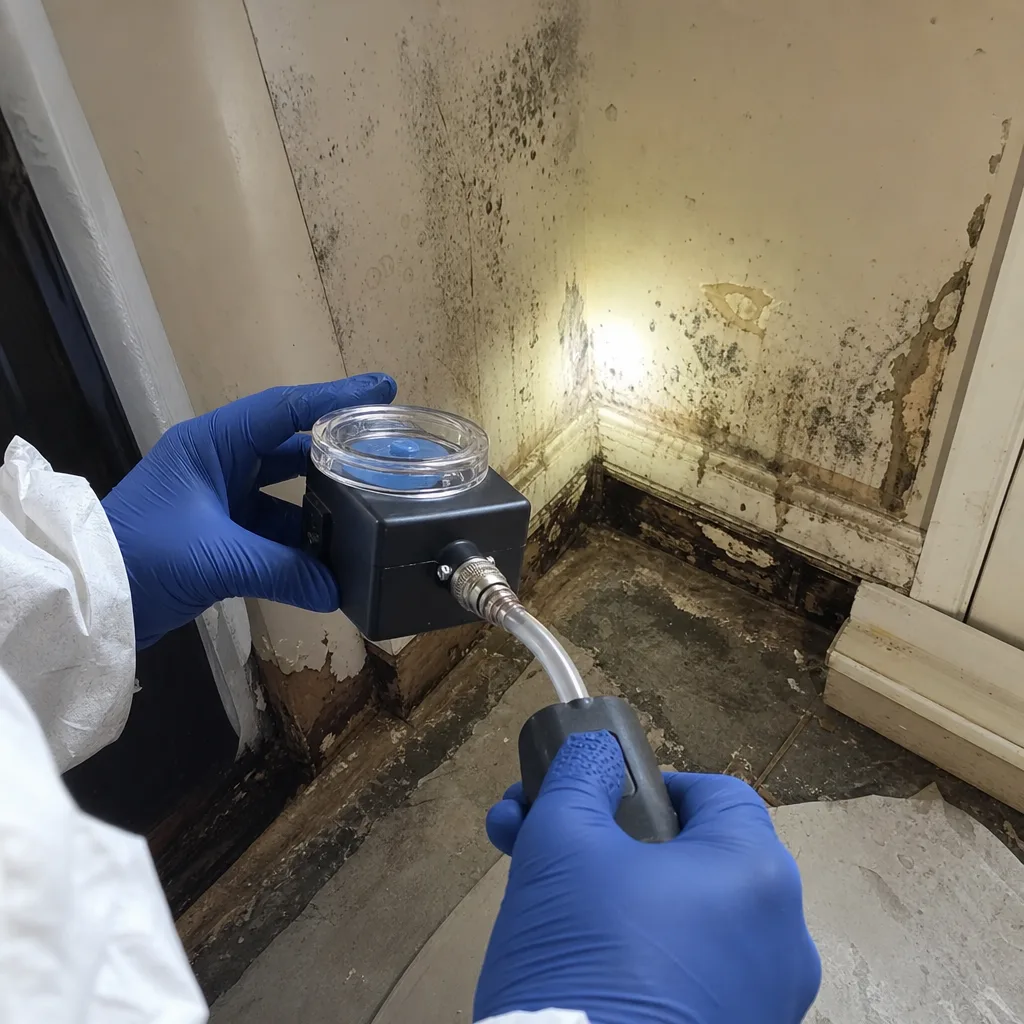
DIY mold remediation carries a specific legal risk that most homeowners do not consider. California Health and Safety Code Section 17920.3 classifies visible mold as a substandard building condition. This means that mold in a property, once known, must be disclosed in any future sale - and the disclosure obligation attaches to the homeowner’s knowledge, not to whether the mold was professionally remediated.
Here is where DIY becomes costly. IICRC S520, the standard for professional mold remediation, requires post-remediation verification (PRV) by an independent third party. This clearance testing documents that airborne mold spore counts have returned to ambient levels and that the remediation was performed according to protocol. Without this documentation, a homeowner who sells their property years later may face liability if mold recurs, even if the original event was a decade past.
We have reviewed competitor estimates for Mold Remediation in Huntington Beach where the scope included no independent clearance testing. Under The Haven Standard, our mold remediation always includes documented clearance, photo records of containment setup and removal, and a written warranty. The 365-Day Done Right Promise covers recurrence, but the documentation protects the homeowner for the life of their ownership.
For homeowners in Huntington Beach’s older neighborhoods - the 1950s and 1960s construction near Lake Street and the original tract homes south of Warner Avenue - this is especially relevant. These properties often have unconditioned crawl spaces, original plaster or drywall without moisture-resistant backing, and aging plumbing that makes repeat events more likely. Documentation from one incident becomes evidence of proper response if a second incident occurs.
Actual Cost Comparison: DIY vs Professional
Homeowners often assume DIY saves money. For a very small, very simple loss, this can be true. But the comparison changes when you account for equipment rental, the value of documentation, and the statistical risk of secondary damage. See our guide on how to hire a damage restoration contractor in Huntington Beach for what to look for in professional documentation.
Here is a realistic breakdown for a typical Huntington Beach Category 1 water loss: clean water, under 200 square feet, affecting carpet and pad over a concrete slab in a single room, with no wall penetration:
| Item | DIY Approach | Professional Mitigation |
|---|---|---|
| Initial extraction | Wet-dry vacuum rental: $45/day | Included in service |
| Air movement | Box fans (owned or purchased): $0-$80 | 2-3 axial air movers: included |
| Dehumidification | Residential dehumidifier rental: $65/day for 3-5 days | LGR dehumidifier (Dri-Eaz or Phoenix): included |
| Moisture verification | Pinless meter purchase: $50-$150 (consumer grade, uncalibrated) | Calibrated multi-sensor meters: included |
| Documentation | Self-generated photos and notes | Daily drying log, photo record, written scope |
| Typical total | $250-$500 | $1,200-$2,400 (Huntington Beach market rate) |
| Secondary damage rate | Estimated 25-35% for DIY without professional verification | Under 5% with documented IICRC-standard drying |
The critical comparison is not the initial outlay. It is the cost of a denied claim. A mold remediation that follows failed DIY drying typically runs $4,000-$8,000 in Huntington Beach. If the insurer denies coverage due to lack of documentation, the homeowner pays that full amount. Even with a deductible of $1,000-$2,500, the professional mitigation invoice is often the lower total cost when weighted by risk.
Under Haven Standard, Clause 1, we deliver a written price before any work starts. We also offer a Free Second Opinion on any competitor’s written estimate. Homeowners who have received a quote from another Water Damage Restoration in Huntington Beach provider can bring it to us for review at no charge. This lets you compare not just price, but what documentation is included.
How to DIY Without Voiding Your Claim
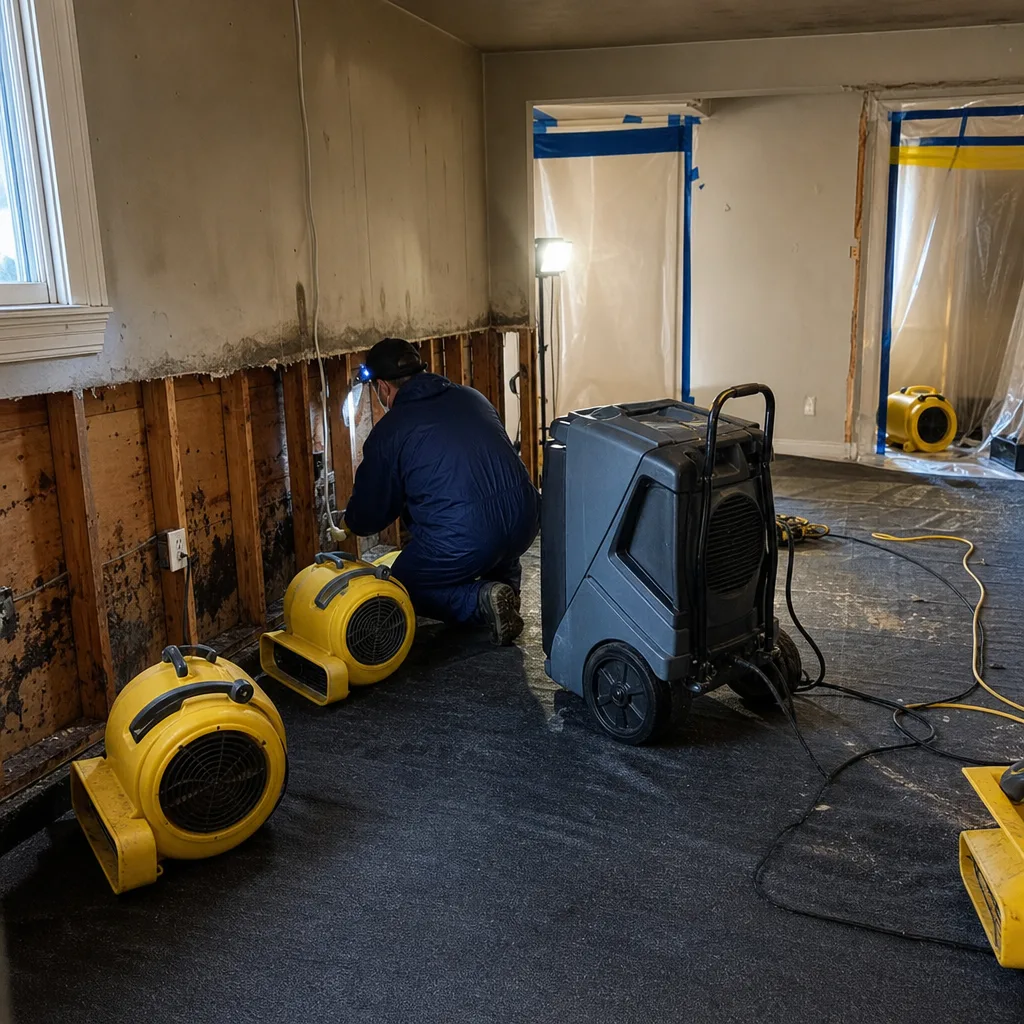
If you choose to begin mitigation before professional help arrives, you can preserve your claim eligibility by creating a defensible record. Here is how:
- Photograph everything before touching it. Geo-tagged, time-stamped photos of the water source, the extent of migration, affected materials, and standing water depth. Include wide shots and close-ups. This establishes the baseline condition.
- Record environmental readings. Note the time of discovery, indoor temperature, and relative humidity if you have a hygrometer. These readings contextualize later professional measurements.
- Document equipment used. Record manufacturer, model, and specifications for any fans, dehumidifiers, or extraction equipment. If you rent, keep the rental agreement showing dates and equipment type.
- Log all actions with timestamps. When did extraction begin? When was the last standing water removed? When did dehumidification start? A simple written log is better than memory.
- Call a professional within 24-48 hours for verification. Even if you handled extraction yourself, professional moisture readings within the critical window preserve your ability to claim secondary damage if it later develops. The documentation gap that sinks claims is typically the absence of professional verification, not the absence of professional extraction.
This approach does not replace professional mitigation. It supplements it. The homeowner who extracts standing water promptly, documents thoroughly, and then brings in a professional for verification and structural drying gets the benefit of both speed and documentation.
Equipment Rental vs Professional-Grade Drying
Home improvement stores in Huntington Beach rent carpet dryers and dehumidifiers that appear adequate. The specifications tell a different story.
A typical rental dehumidifier removes 30-50 pints of moisture per day at 80°F and 60% relative humidity. A Phoenix R200 LGR (low-grain refrigerant) dehumidifier removes 125 pints per day under the same conditions, and continues extracting efficiently as humidity drops - the “low-grain” performance that matters in late-stage drying. A Dri-Eaz Evolution removes up to 130 pints and operates at temperatures down to 33°F, which matters in unconditioned garages or during winter losses.
Air movers show similar gaps. Rental units typically deliver 800-1,600 CFM with fixed positioning. Professional axial air movers from XPOWER or B-Air deliver 3,000+ CFM with multiple angle settings that direct airflow under carpet, behind baseboards, and into wall cavities when combined with injection drying systems like Injectidry.
The Injectidry system deserves specific mention because it addresses the limitation of surface drying. This system uses a panel or hose-based delivery to force dry air into wall cavities, under hardwood flooring, and through cabinet toe-kicks. We have used Injectidry systems in Huntington Beach homes near the pier, where historic construction and tight spaces make traditional air movement impractical. No rental equipment replicates this capability.
The cost of professional-grade equipment is embedded in our service rate. For a homeowner considering rental, the relevant comparison is: can you rent equipment that achieves IICRC-verifiable dryness, and can you document that achievement? If not, the rental savings are illusory.
Common Mistakes to Avoid
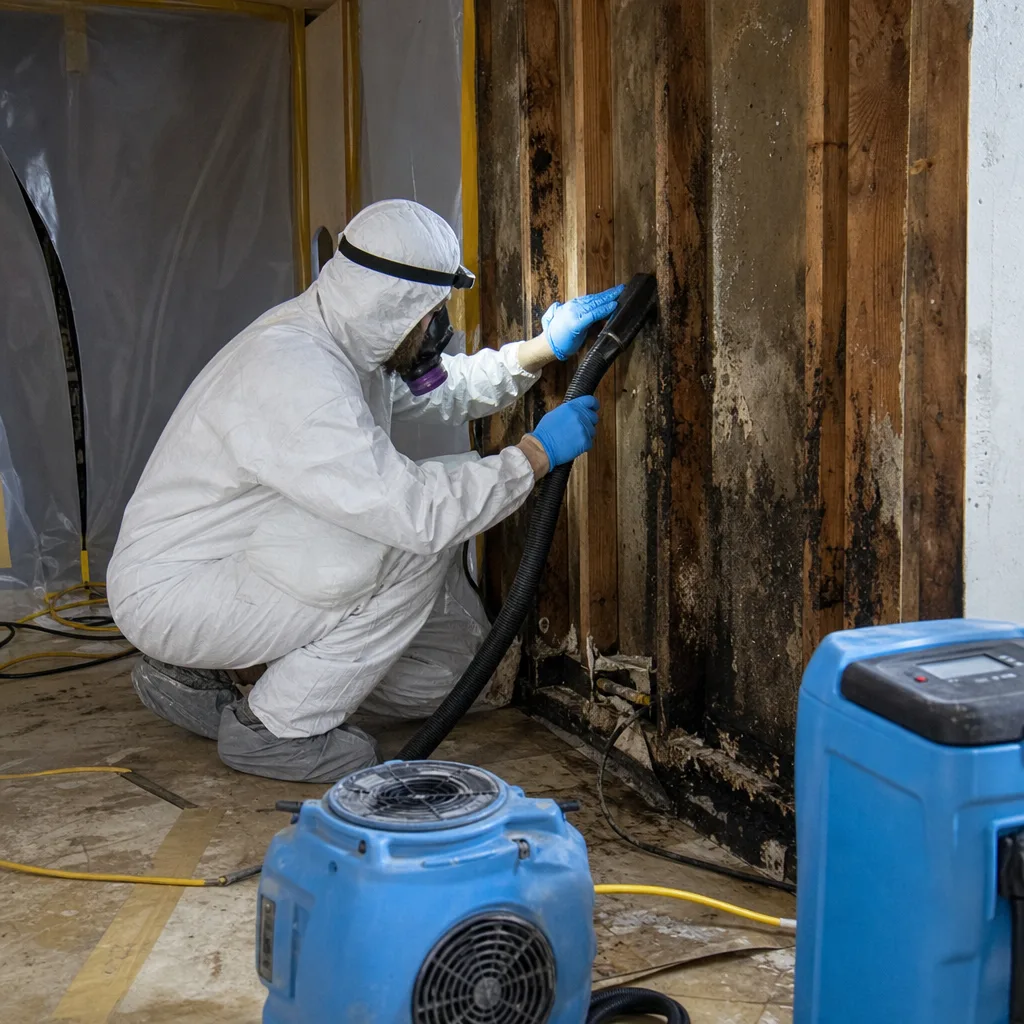
- Assuming carpet drying equals structural drying. Carpet and pad can feel dry while the subfloor beneath remains above 19% moisture content. We see this regularly in Huntington Beach condos near Beach Boulevard, where slab-on-grade construction traps moisture.
- Using bleach on mold. Bleach does not penetrate porous materials and can add moisture that worsens the problem. It also produces no documentation that remediation was performed to S520 standards.
- Failing to identify the water category. Category 1 (clean) becomes Category 2 (gray) within 48-72 hours, and Category 3 (black) if sewage or groundwater is involved. Misidentification leads to inadequate PPE, incomplete sanitization, and health liability.
- Not photographing before moving contents. Insurers require proof that items were damaged by the covered loss, not pre-existing. A photo of your living room before you move furniture establishes this chain of evidence.
- Delaying professional involvement for cost reasons. The first 24-48 hours are critical for preventing microbial growth. Waiting for a rental to become available or for a weekend to pass often converts a contained loss into a major claim.
- Ignoring the HVAC system. Water-affected HVAC ducts can distribute mold spores throughout a home. In Huntington Beach, where air conditioning runs heavily in summer months, this cross-contamination path is common.
When to Call a Professional
Call a professional immediately if water has penetrated walls, affected multiple rooms, involved sewage or gray water, or if you cannot identify the full extent of migration. Call if mold is visible or if a musty odor persists after 48 hours of drying. Call if your insurer has already been notified, because they will require professional documentation for any structural or secondary damage claim.
Fire & Smoke Damage Restoration in Huntington Beach should never be attempted DIY - the combination of toxic residues, hidden structural damage, and complex odor removal requires specialized equipment and IICRC-certified technicians.
DryMark Restoration Huntington Beach offers free estimates in Huntington Beach. Our live phone coverage is available 24 hours a day, 7 days a week with no voicemail on emergency lines. Call (657) 288-3467. Every job is quoted in writing before work begins, documented with a photo record on every visit, and covered by the 365-Day Done Right Promise under The Haven Standard.
Frequently Asked Questions
Most California homeowners policies cover the resulting damage from a sudden water loss, but not the cost of your own labor or rental equipment. More critically, insurers routinely deny secondary damage claims - mold, structural decay - when no professional documentation exists to prove the original drying was completed to industry standards. Call (657) 288-3467 for an exact assessment of your coverage; estimates are free.
Our live dispatch answers every call, 24 hours a day, 7 days a week, with no voicemail trees. Emergency response times in Huntington Beach typically range from 45 minutes to 90 minutes depending on traffic and time of day, with faster response to the downtown core and beachfront areas. Call (657) 288-3467 to confirm current availability.
Visible mold on a hard, non-porous surface smaller than 10 square feet can sometimes be addressed with proper PPE and an EPA-registered antimicrobial. However, California Health and Safety Code Section 17920.3 creates disclosure liability for any known mold, and without IICRC S520 clearance documentation, you have no proof the issue was resolved. For porous materials or larger areas, professional remediation with independent post-remediation verification is the only defensible approach. Call (657) 288-3467 for a written scope and price before any work starts.
At DryMark Restoration Huntington Beach, we provide direct adjuster coordination as a standard service, not an upsell. This includes photo documentation formatted to carrier requirements, written scopes with line-item pricing, and daily drying logs that satisfy most California insurers’ documentation requirements. You remain the policyholder and must authorize all work, but we handle the technical communication that determines whether your claim is paid. Haven Standard, Clause 1: written price before work begins, so there are no surprises for you or your adjuster.
A typical Category 1 loss under 200 square feet runs $1,200-$2,400 for professional mitigation including extraction, drying equipment, daily monitoring, and documentation. Category 2 or 3 losses, larger areas, or losses requiring demolition increase from there. We deliver a written price before any work starts, every time, with no scope-creep additions once the crew is inside. Bring a competitor’s written estimate for a Free Second Opinion at no charge.
Some professional-grade equipment - particularly LGR dehumidifiers from Dri-Eaz or Phoenix and axial air movers from XPOWER - is available through specialized rental channels, but not at standard home improvement stores. More importantly, equipment without calibrated moisture measurement and IICRC-trained operation does not produce the documentation your insurer requires. The equipment is necessary but not sufficient; the documentation is what protects your claim.
The Bottom Line
The DIY-versus-professional decision is not about whether you are capable of operating a wet-dry vacuum or positioning a fan. It is about whether you can produce, at the moment an insurance adjuster asks, a documented record that proves your home was returned to a dry, safe, verifiable condition. Most Huntington Beach homeowners can handle surface extraction and content inventory. Few can generate a psychrometric drying log or independent mold clearance certificate. The cost gap between DIY and professional mitigation narrows dramatically when you weight it by the risk of a denied secondary damage claim. Under The Haven Standard, we provide the documentation that turns restoration work into payable claims - a written price before work starts, a photo record on every visit, and a 365-Day Done Right Promise backed by a signed guarantee. Browse our more guides & resources for additional homeowner guidance, or call us. The estimate is free, and the documentation we provide may be the difference between a covered claim and a denied one.
Written by Alicia Brennan, Owner at DryMark Restoration Huntington Beach, serving Huntington Beach since 2011.