
Last updated September 23, 2026
Free visual inspection and a written scope of work before any mitigation begins - photos, moisture readings, and drying logs go in your claim file
The scope we write is the scope we bill. Anything new gets shown to you, in writing, before we touch it.
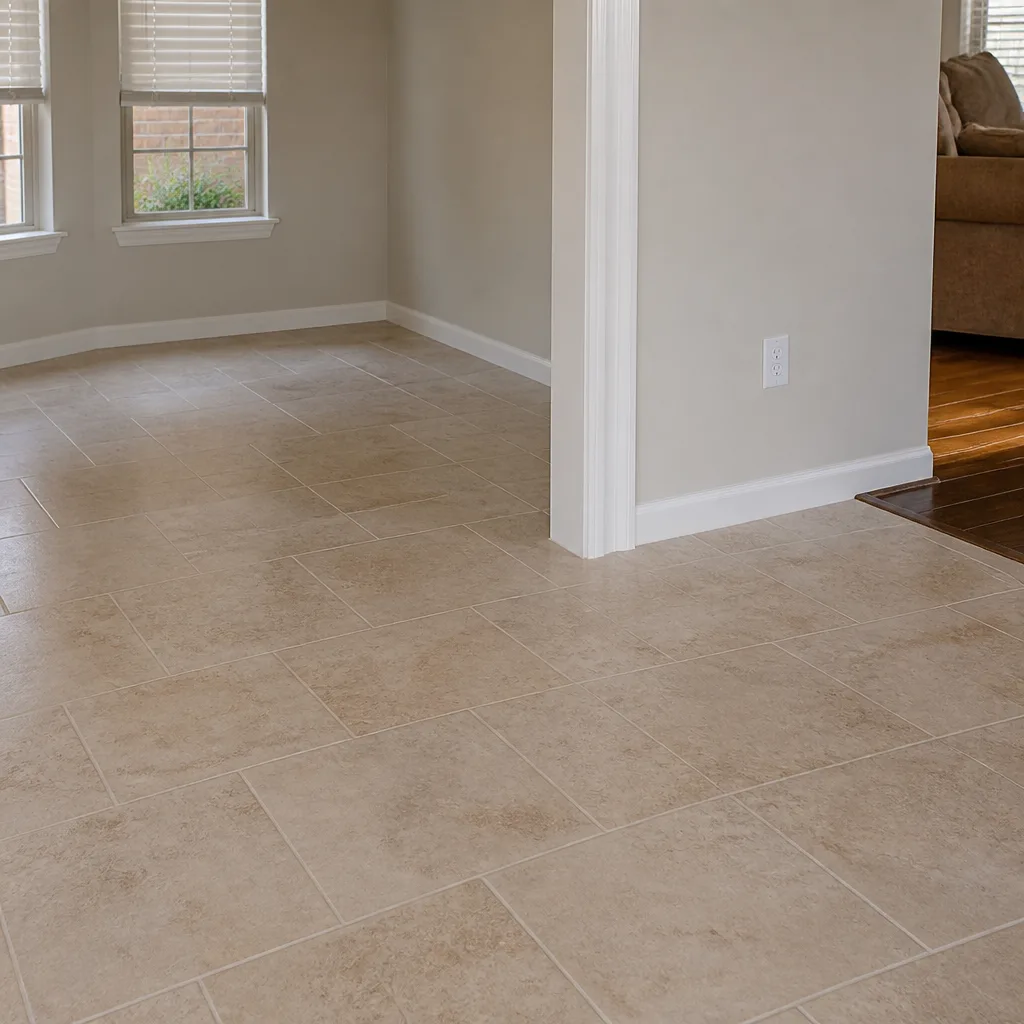

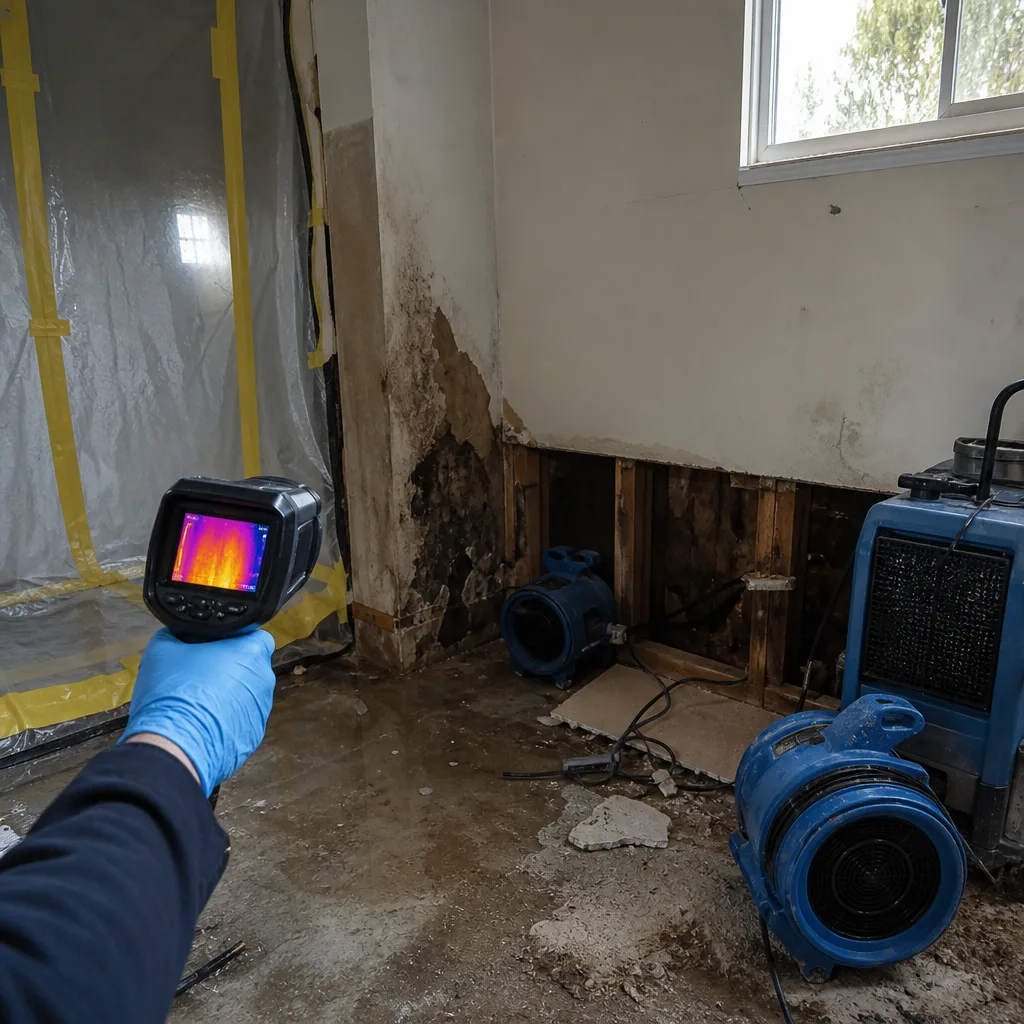 Before
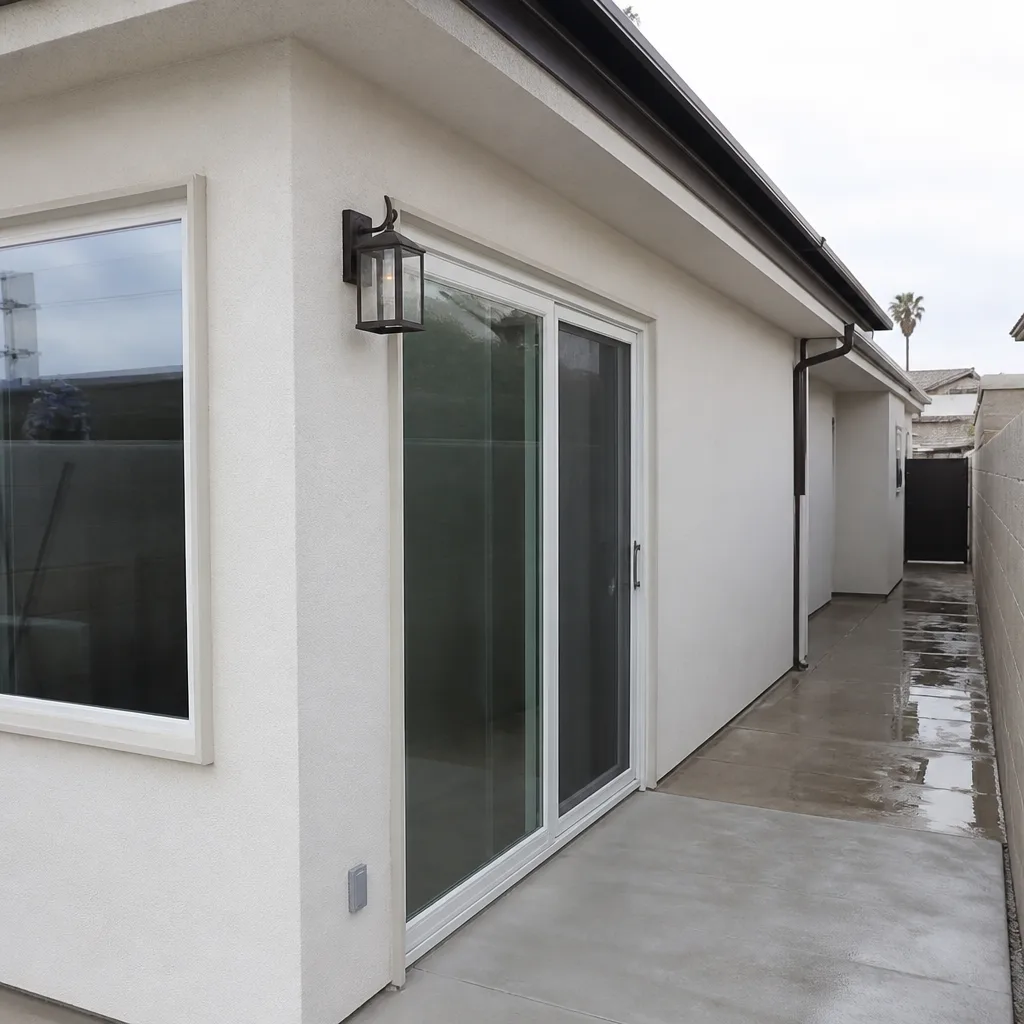 After
After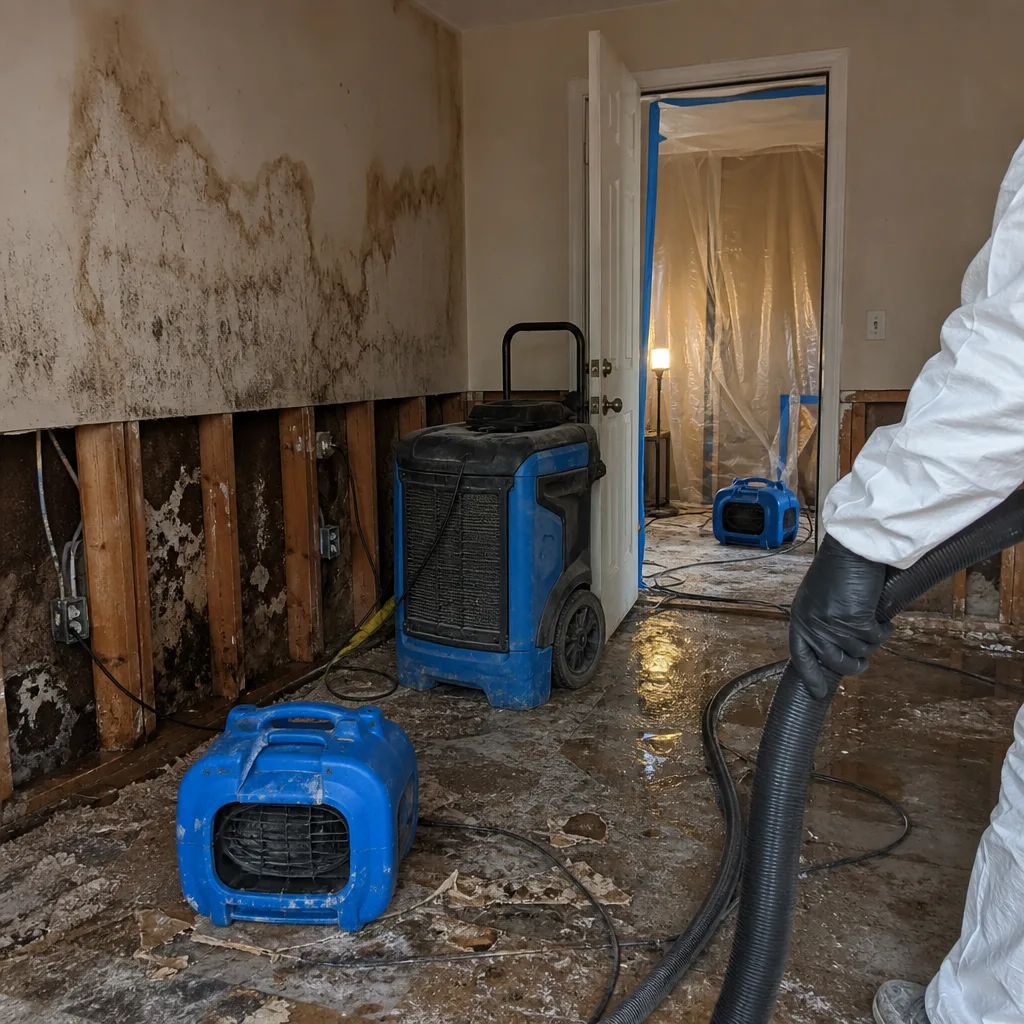 Before
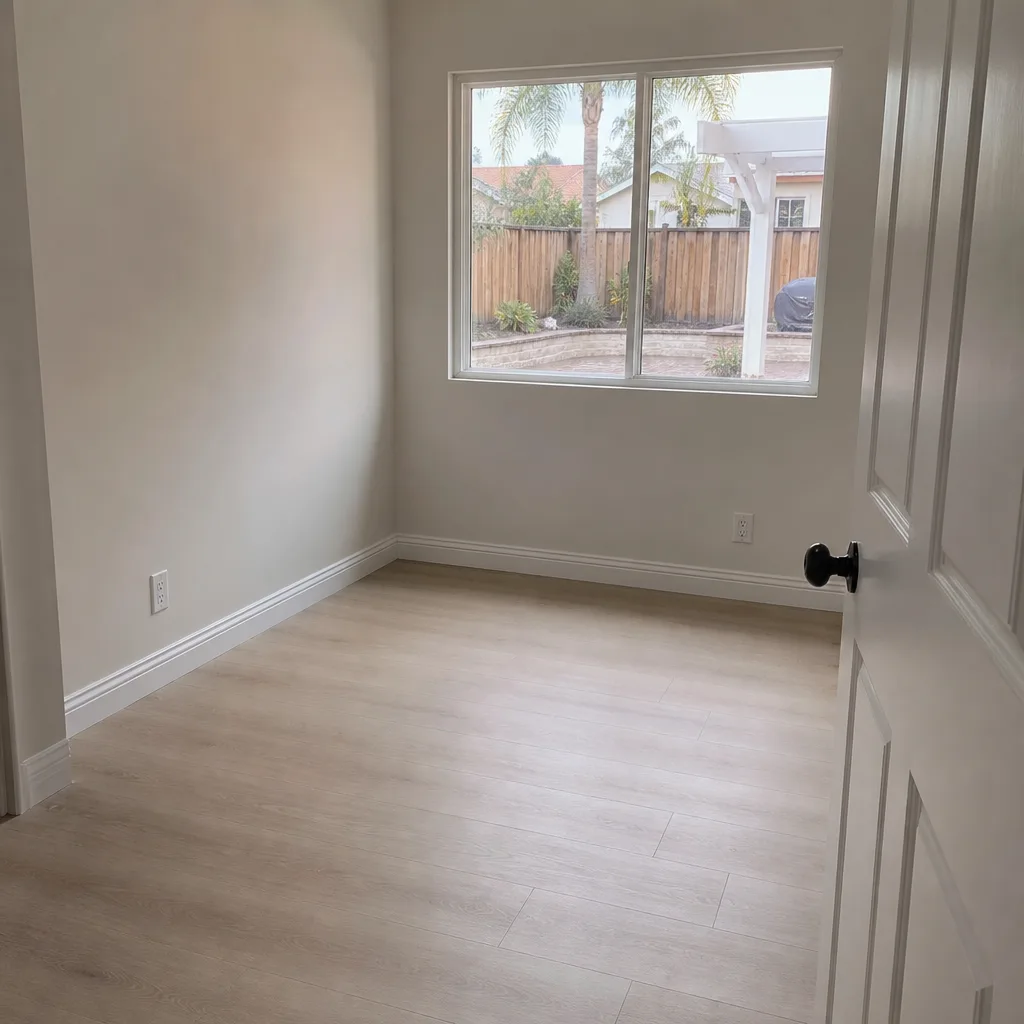 After
After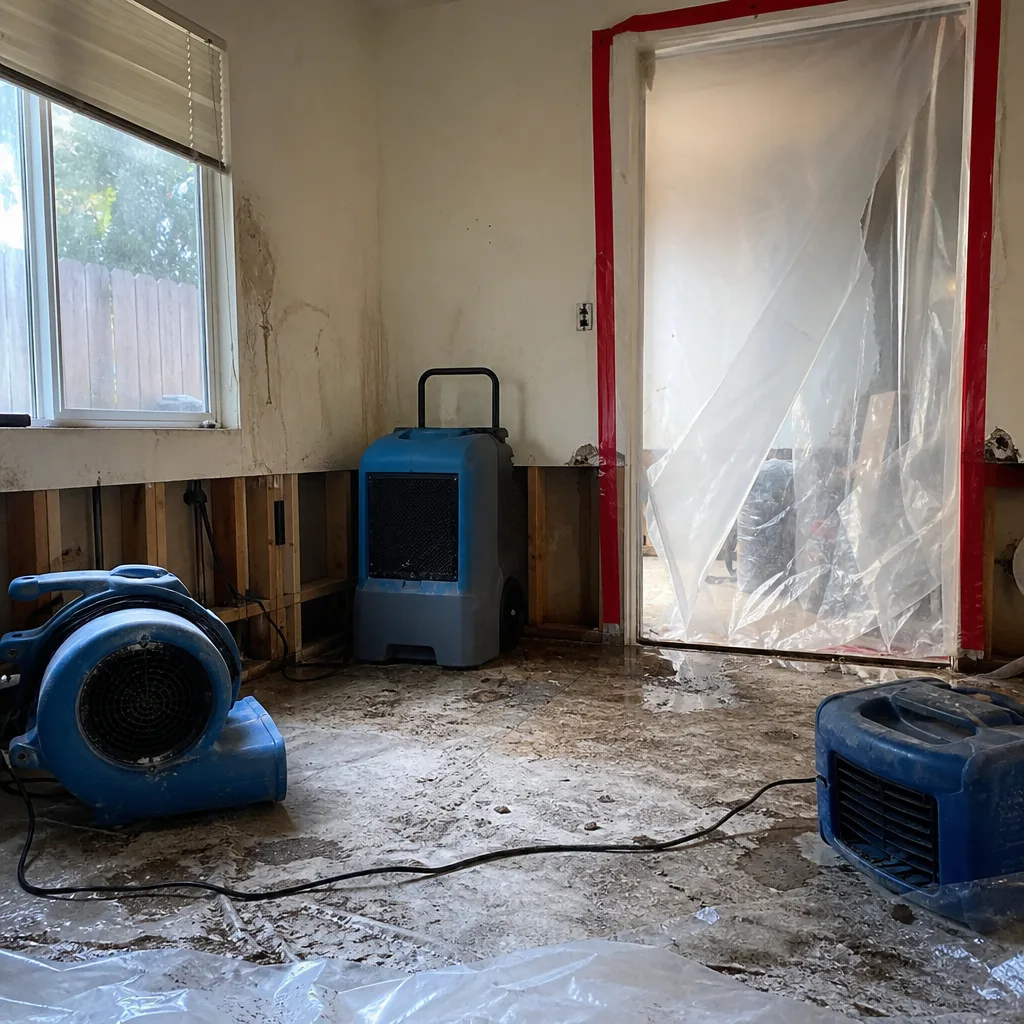 Before
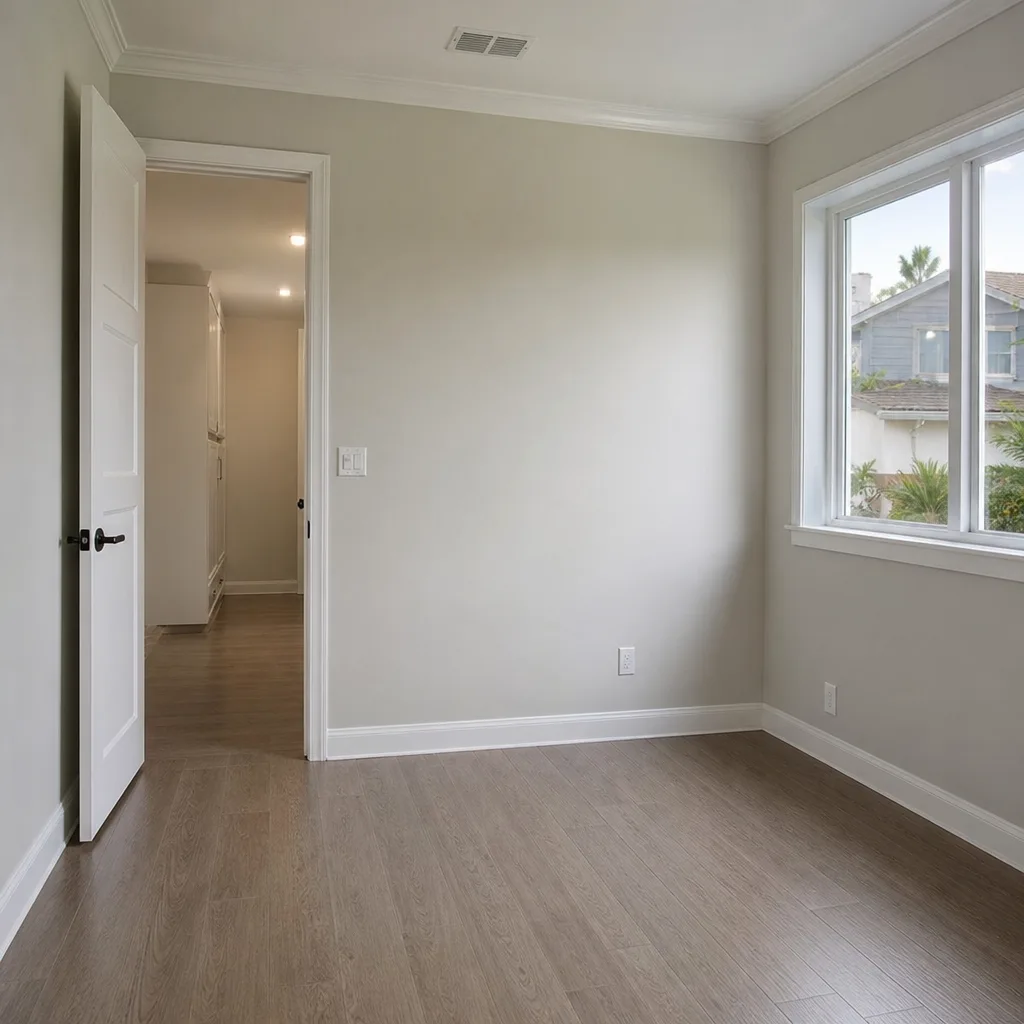 After
AfterHow to Hire a Damage Restoration Contractor in Huntington Beach: A Step-by-Step Guide
The contractor who arrives fastest after a pipe burst is statistically the most likely to skip the moisture baseline reading - the single number an insurer needs to approve your drying invoice. In Huntington Beach, where slab-on-grade construction and coastal humidity create hidden moisture traps behind stucco and drywall, that skipped reading can cost a homeowner thousands in denied coverage. This guide replaces the useless advice to “get three quotes” with a documentation-based hiring framework drawn from The Complete Guide to Damage Restoration in Huntington Beach. You’ll learn to evaluate restoration contractors by the quality of their written process, not their sales pitch, so your claim gets paid without a fight.
Quick Answer
To hire a damage restoration contractor in Huntington Beach, verify their CSLB license and active workers’ comp online, demand five written documents before any work begins (scope, estimate, equipment list, drying timeline, and signed authorization), and reject any contractor who offers verbal-only pricing or pressures you to sign an Assignment of Benefits. The quality of a contractor’s documentation predicts whether your insurance claim will be paid - their equipment brand does not.
Table of Contents
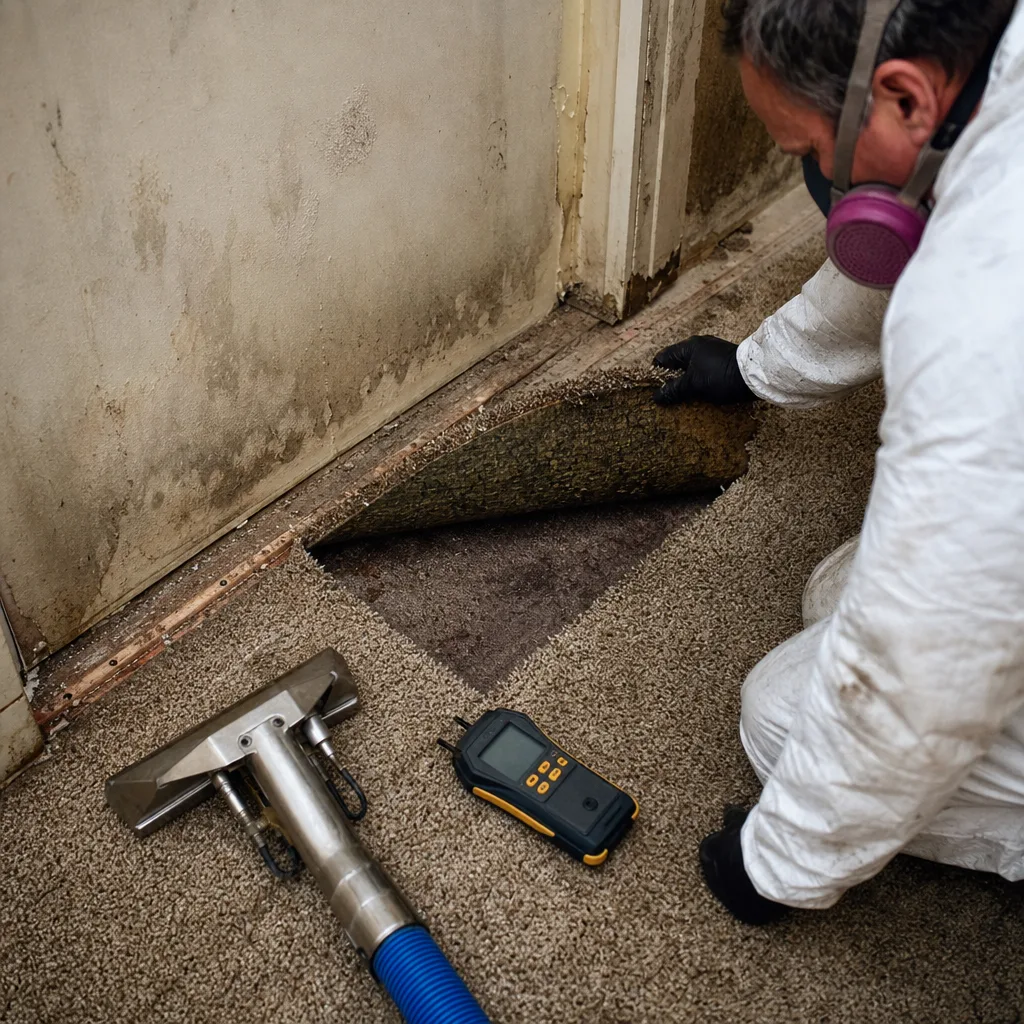
- Why “Get Three Quotes” Fails in Restoration
- The Five Written Documents Every Legitimate Contractor Must Produce
- How to Verify a California Restoration Contractor in Under 10 Minutes
- The Assignment of Benefits Trap
- Huntington Beach Red Flags: Post-Disaster Contractor Scams
- Four Questions That Expose Documentation Standards
- How Documentation Quality Determines Claim Approval
- Common Mistakes to Avoid
- When to Call a Professional
- Frequently Asked Questions
- The Bottom Line
 Before
 After
AfterWhy “Get Three Quotes” Fails in Restoration
The standard hiring advice assumes comparable products. A roof shingle is a roof shingle. A furnace is a furnace. But water damage restoration is a service defined by invisible variables: the vapor pressure differential between your wet subfloor and the ambient air, the specific humidity ratio your dehumidifier must achieve to prevent secondary mold growth, the porosity classification of your particular drywall assembly.
Without a written scope defining these variables, three quotes are just three guesses. We’ve reviewed competitor estimates in Huntington Beach that ranged from $1,800 to $7,400 for the same water loss - not because one contractor was dishonest, but because one scoped three days of drying with six air movers and a dehumidifier, while another scoped seven days with injectidry hardwood floor mats, a desiccant dehumidifier, and daily psychrometric monitoring. Same house. Different documentation. Different outcomes.
The homeowner who chooses by price alone often gets the contractor who guessed shortest. That contractor then discovers hidden moisture behind the baseboards, submits a supplemental invoice the insurer rejects for lack of baseline documentation, and the homeowner pays the gap.
In Huntington Beach specifically, this problem intensifies. Our coastal climate means relative humidity regularly sits above 70 percent even in dry months, slowing evaporation and extending drying timelines. A contractor quoting Huntington Beach water damage restoration without accounting for ambient humidity in their projected timeline - a key item on any Water Damage Restoration Maintenance Checklist for Huntington Beach Homeowners - is either inexperienced or planning to bill supplements later. Neither serves the homeowner.
The correct hiring process evaluates how thoroughly a contractor documents before work starts. Documentation is the only variable you can verify before signing. Equipment brands, response times, and “experience” claims are marketing. A written scope with line-item pricing is evidence.
The Five Written Documents Every Legitimate Contractor Must Produce
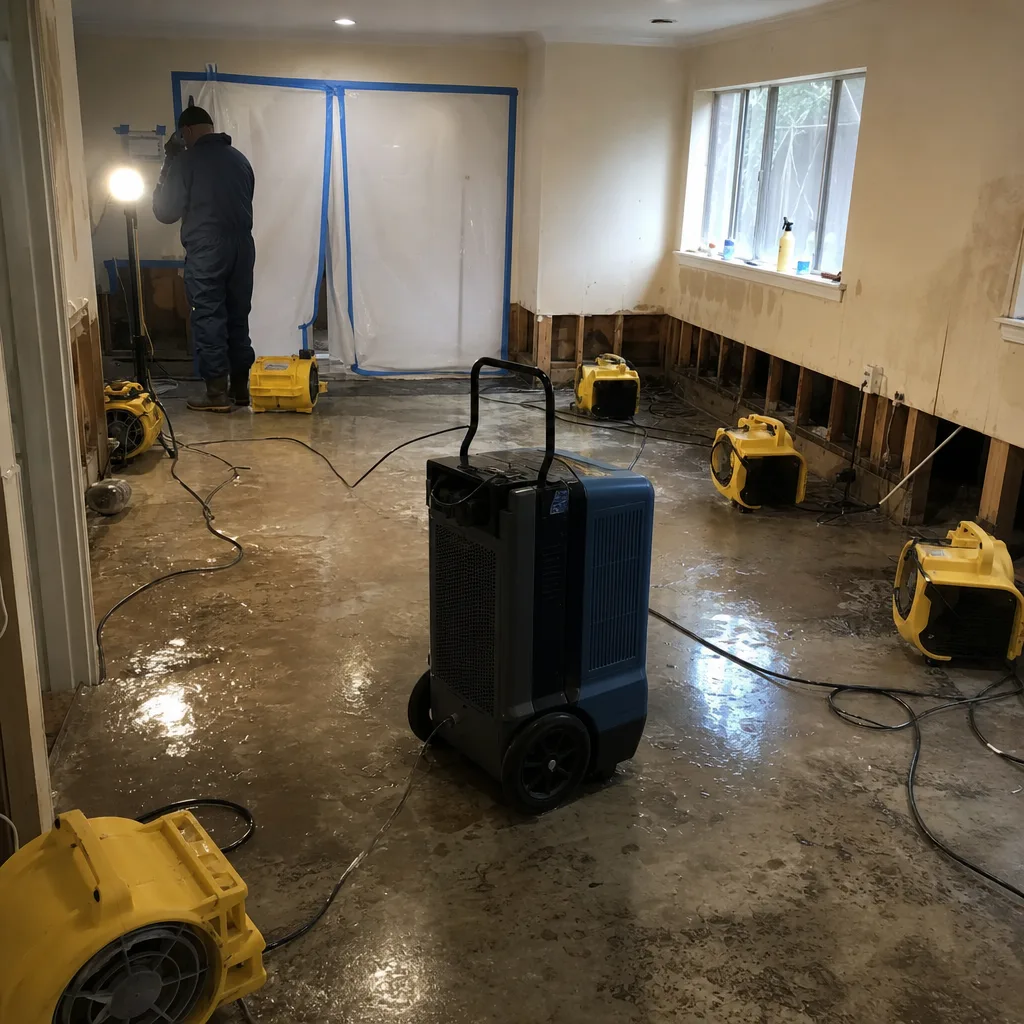
Before any equipment enters your home, a restoration contractor operating to professional standards must produce five documents. Each serves a specific function in the claim process. Missing any one creates a gap that insurers exploit to deny or reduce payment.
1. Scope of Work
This document defines exactly what is wet, how wet it is, and what must be done. A legitimate scope includes: moisture content readings for each affected material (wood flooring, drywall, insulation, subfloor), classified by type (non-porous, semi-porous, porous), square footage of affected area, and a room-by-room inventory of damaged contents. The scope should reference IICRC S500 standards for water damage restoration or IICRC S520 for mold remediation, specifying which category of water loss (Category 1, 2, or 3) applies to your situation.
Without this document, an adjuster cannot verify that the work billed was necessary. We’ve seen claims denied in Huntington Beach because a contractor billed for “drying living room” without specifying the material (drywall? plaster? lath?) or the square footage. The insurer assumed padding and paid for half the actual work.
2. Line-Item Estimate
Each piece of equipment, each labor hour, each material must be listed separately with a unit price. Xactimate is the industry standard pricing database; legitimate contractors use it or can explain their variance. The estimate must total to a single number, and that number must appear on the authorization form you sign.
Haven Standard, Clause 1: written price before work begins. No exceptions. A contractor who says “we’ll bill your insurance directly, don’t worry about the total” is asking you to sign a blank check.
3. Equipment List
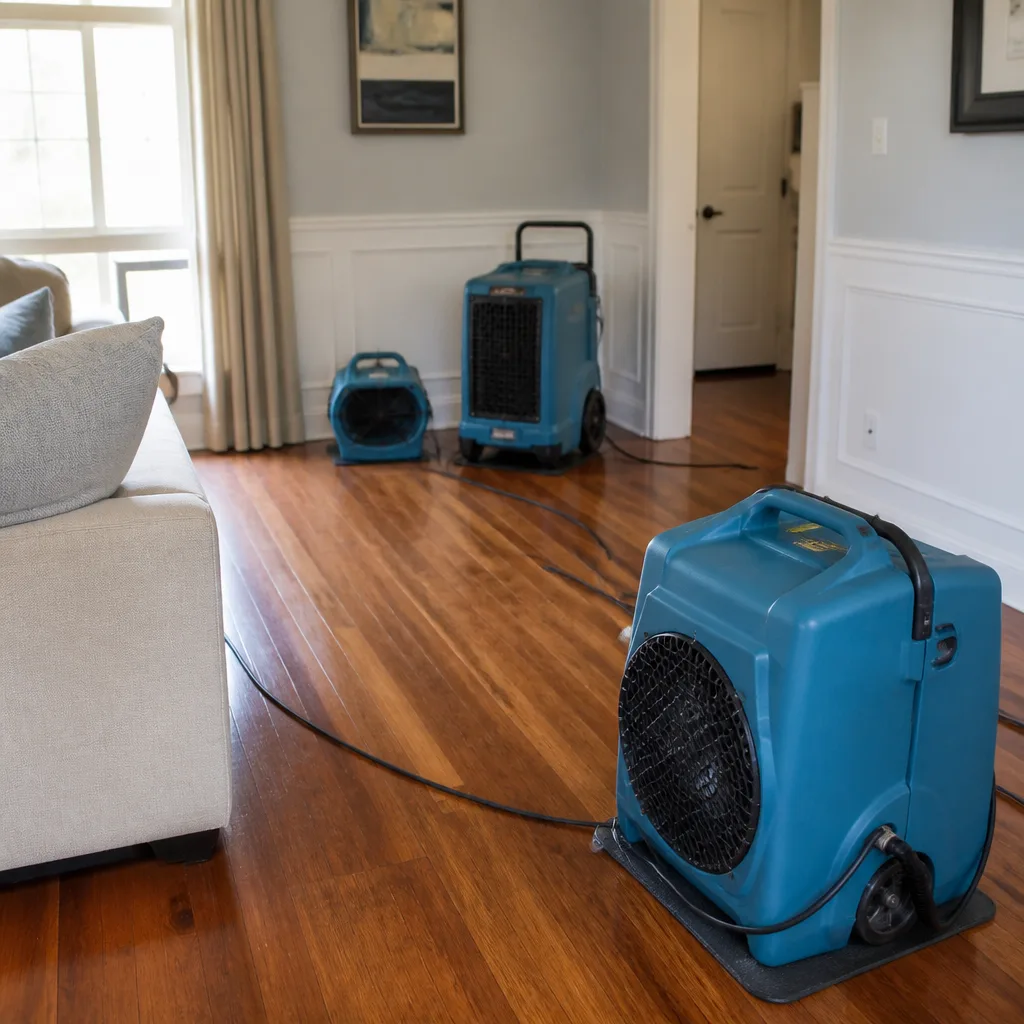
Specific models, serial numbers where applicable, and placement locations. “Dehumidifier” is not enough. “Phoenix 200 HT LGR dehumidifier, SN 45678, placed in living room northeast corner, targeting 50 grains per pound specific humidity” is what your adjuster needs to see. This list also protects you: if equipment disappears while you’re at work, you have a record of what was in your home.
4. Projected Drying Timeline
A day-by-day projection with target moisture readings for each material. Day 1: hardwood at 18% moisture content, target 12%. Day 3: subfloor at 22%, target 15%. This timeline is not a guess; it’s calculated from the psychrometric data (temperature, relative humidity, specific humidity, and vapor pressure) collected at the initial assessment.
In Huntington Beach, where morning marine layer can spike indoor humidity, timelines often run 20-30% longer than inland projections, as covered in our Seasonal Damage Restoration Care for Huntington Beach: Year-Round Homeowner’s Guide. A contractor quoting inland drying schedules for coastal properties is either inexperienced or planning to bill extended days as supplements.
5. Signed Authorization
This document authorizes work to begin at the stated price, with your signature, the date, and the contractor’s license number. It should reference the four documents above by date and version. Never sign an authorization that references “estimate to follow” or “price per insurance approval.” That language voids your ability to dispute charges.
At DryMark Restoration Huntington Beach home, we deliver all five documents before equipment placement on every job. Not most jobs. Every job. Haven Standard, Clause 1 exists precisely because we’ve seen what happens when documentation is treated as optional.
How to Verify a California Restoration Contractor in Under 10 Minutes
California requires any construction-related work over $500 to be performed by a contractor licensed by the Contractors State License Board (CSLB). Restoration work - demolition, drying, reconstruction - falls under this requirement. Verification takes three steps and costs nothing.
- Check the CSLB license number. Visit cslb.ca.gov and enter the contractor’s license number. Confirm the status is “Active,” the classification includes B (General Building) or C-61/D-49 (Miscellaneous Water Damage), and the license bond is current. The page also shows disciplinary actions. A contractor who hesitates to provide their license number is not worth considering.
- Verify workers’ compensation coverage. On the same CSLB page, click through to the workers’ comp verification. In California, restoration contractors with employees must carry active workers’ comp. If they use “independent contractors” to avoid this requirement, you may be liable if someone is injured in your home. The verification takes 30 seconds.
- Confirm IICRC certification. The Institute of Inspection, Cleaning and Restoration Certification maintains a public directory at iicrc.org. Enter the technician’s name or the company’s certification number. Look for WRT (Water Damage Restoration Technician) and ASD (Applied Structural Drying) at minimum. For mold, AMRT (Applied Microbial Remediation Technician). Certification without these specific designations may indicate a carpet cleaner who added a water damage line to their website, not a restoration professional.
We’ve encountered unlicensed operators in Huntington Beach after major rain events, often using out-of-state license numbers or expired classifications. The 10-minute verification prevents this entirely. A legitimate contractor will not be offended by the request; they expect it.
The Assignment of Benefits Trap
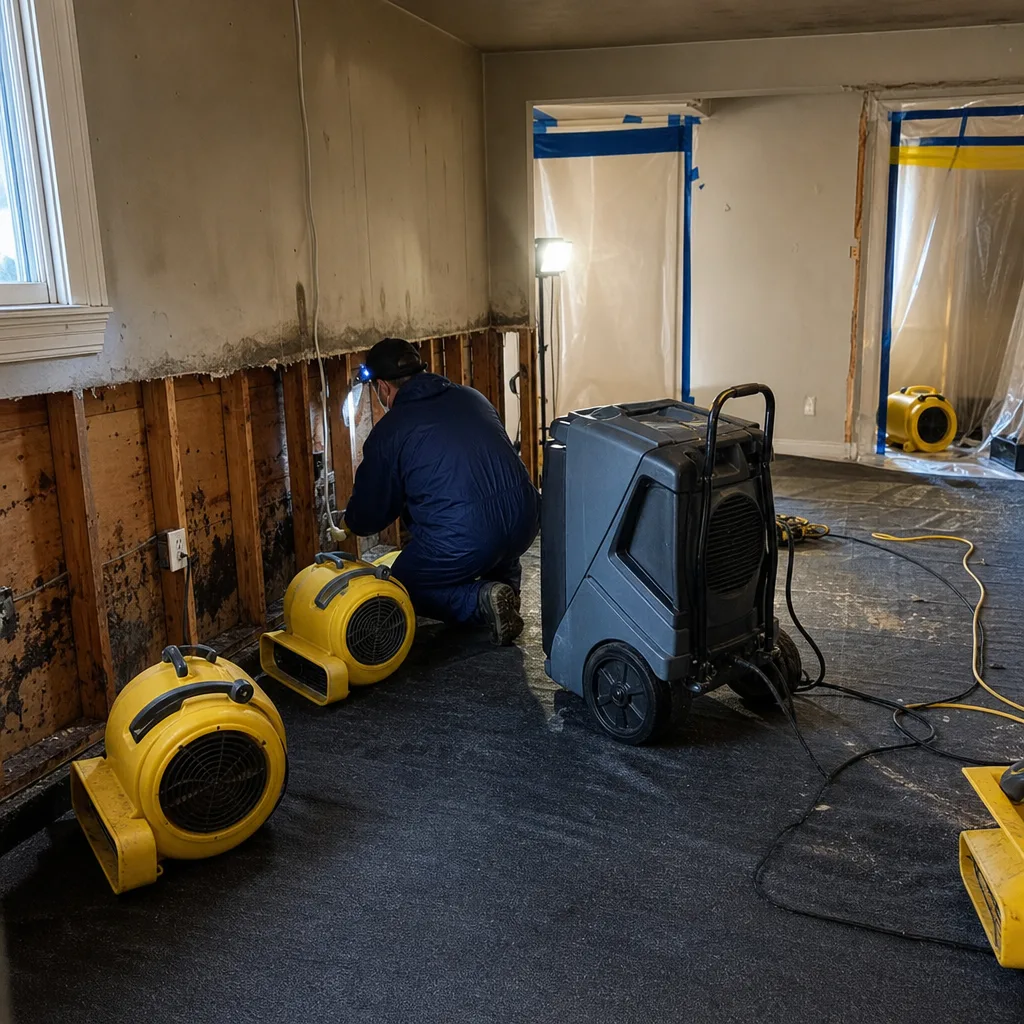
An Assignment of Benefits (AOB) is a legal document that transfers your insurance claim rights to the contractor. Once signed, the contractor - not you - controls negotiations with your insurer, approves supplements, and can sue your insurance company in your name. In extreme cases, the contractor collects payment directly, and you lose the right to dispute whether the work was necessary or properly priced.
AOB agreements are particularly common in Florida and have spread to California coastal markets. After Hurricane Hilary’s remnants flooded parts of Orange County in 2023, we saw AOB offers increase in Huntington Beach and surrounding areas. The pitch is seductive: “Sign here, we’ll handle everything with your insurance, you pay nothing out of pocket.” What the homeowner doesn’t hear: “And if we inflate the bill, you can’t stop us, and your insurer may sue you for cooperating with fraud.”
California does not prohibit AOBs outright, but the Department of Insurance has issued multiple warnings. A restoration contractor who pressures you to sign an AOB before your adjuster inspects the damage is prioritizing their financial interest over your legal protection.
The alternative is direct billing with full documentation. At DryMark Restoration Huntington Beach, we work with your adjuster using the five documents described above, but the claim remains in your name. You see every invoice. You approve every supplement. You retain the right to dispute. This is slower for us - we can’t sue your insurer without your involvement - but it’s the correct process for homeowners who want control of their claim.
If a contractor presents an AOB, our advice is simple: decline, and hire a contractor who will document to claim standards without requiring you to surrender your rights.
Huntington Beach Red Flags: Post-Disaster Contractor Scams
Specific behaviors predict contractor failure or fraud in our market. We’ve documented these patterns across hundreds of jobs since 2011.
- Door-knocking within hours of a weather event. Legitimate restoration companies in Huntington Beach are responding to existing customer calls after storms. The crew going door-to-door is typically unlicensed, uninsured, and planning to collect deposits before disappearing. In 2023, following the August tropical storm that flooded garages from Huntington Harbour to Bolsa Chica, we documented three separate door-to-door operations that collected deposits and never returned.
- Pressure to sign before the adjuster arrives. Any contractor who says “we need to start immediately or mold will grow” while also refusing to wait for your adjuster is creating a situation where their work cannot be independently verified. Mold grows over 48-72 hours in most conditions. Your adjuster can typically inspect within 24 hours. The urgency is manufactured.
- Verbal-only pricing with “insurance will cover it.” This directly violates Haven Standard, Clause 1. Insurance covers documented, necessary work at reasonable rates. It does not cover whatever a contractor chooses to bill. Verbal pricing prevents you from verifying reasonableness.
- Requests for large upfront deposits on emergency work. Reputable restoration contractors bill upon completion or in progress payments tied to documented milestones. A demand for 50% deposit before equipment placement suggests cash flow problems or intent to abandon the job.
- No physical address or local phone number. Verify the business address exists. We’ve seen contractors list Huntington Beach suites that turned out to be mail forwarding services. A local office with staff during business hours indicates operational stability.
- Refusal to provide license number or proof of insurance. This should end the conversation immediately. No exceptions.
Four Questions That Expose Documentation Standards
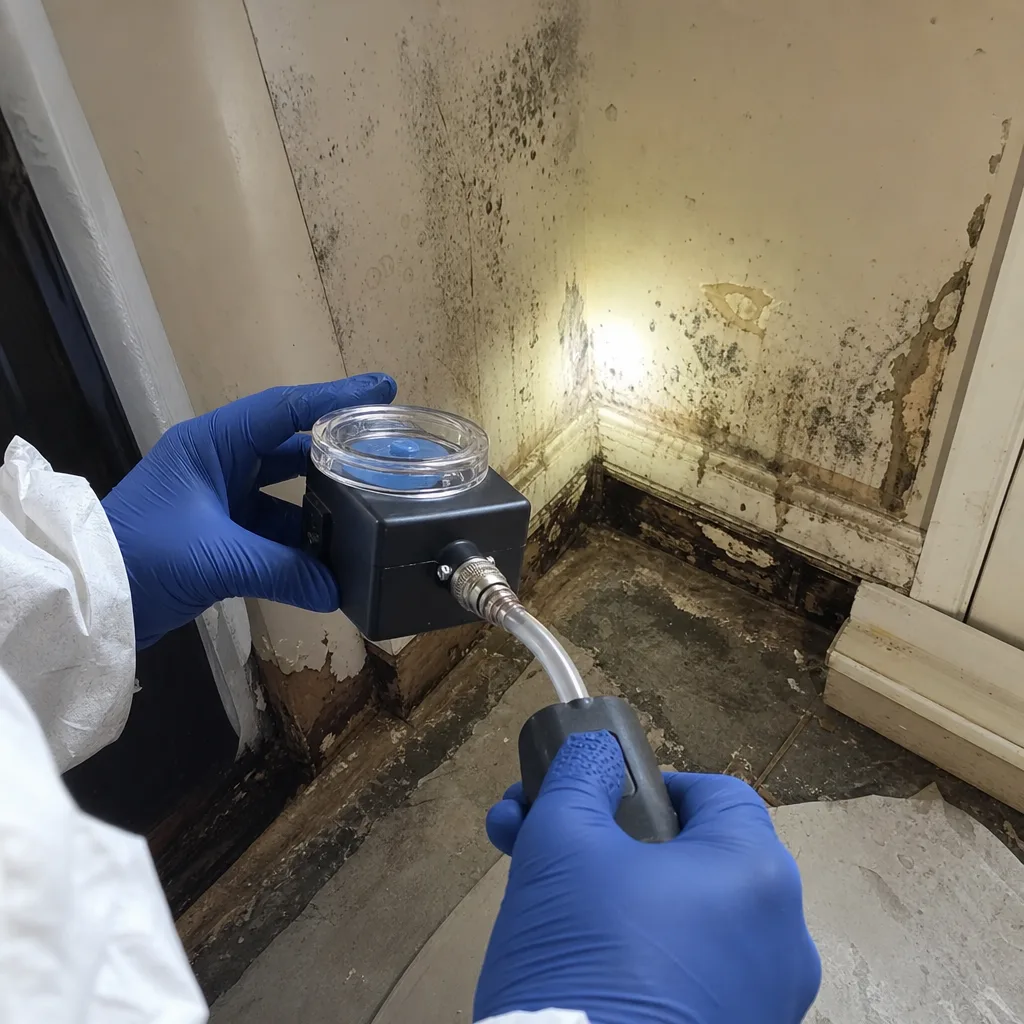
These questions, asked by phone before any site visit, separate contractors who document to claim standards from those who do not. The answers reveal process, not personality.
- “Will you provide a written scope with moisture readings before starting work?” A contractor who says “we’ll assess when we get there” or “the scope comes after drying” does not follow IICRC S500 standards, which require baseline documentation. The correct answer: “Yes, we’ll document pre-loss moisture content by material and room, and you’ll receive a copy before equipment placement.”
- “What specific humidity target will your dehumidifiers achieve, and how will you measure progress daily?” Vague answers (“dry enough,” “when it feels right”) indicate technicians without ASD training. Specific answers reference grains per pound, vapor pressure differential, and daily psychrometric readings logged to IICRC standards. Ask if you’ll receive the drying log; the answer should be yes, as a standard deliverable.
- “Can I review your line-item estimate in Xactimate or equivalent before authorizing work?” Contractors using proprietary pricing systems they won’t explain, or who say “we don’t use Xactimate but our prices are fair,” are asking for trust they haven’t earned. Transparency about pricing methodology is non-negotiable.
- “What documentation will my adjuster receive, and when?” The correct answer includes: initial scope and estimate within 24 hours, daily drying logs with moisture readings, photo documentation of all affected areas before and after, and final invoice with material certifications. If the contractor says “we’ll bill your insurance directly, you don’t need to worry about documentation,” they are not working to claim standards. They are working to their own internal standard, which may or may not align with what your insurer will pay.
We’ve used these questions in hiring evaluations for our own subcontractor network. Contractors who answer specifically stay. Those who deflect or promise to “explain everything on site” do not.
How Documentation Quality Determines Claim Approval
Insurance claims are adjudicated on evidence, not sympathy. The adjuster reviewing your file has seen hundreds of restoration invoices. Their job is to distinguish necessary, documented work from inflated or unsupported billing. The quality of your contractor’s documentation is the primary variable in this determination.
Consider two scenarios for the same water loss in a Huntington Beach home near the Santa Ana River channel, where high water tables complicate slab drying:
Contractor A submits: “Dried living room, 3 days, $4,200.” No moisture readings. No equipment list. No photos. The adjuster sees a generic description with no evidence the work was necessary or properly scoped. Payment: denied or reduced to $1,800 based on generic “dry small room” benchmark.
Contractor B submits: “Initial assessment 10/15, living room 320 sq ft, drywall moisture content 28% (baseline), target 12% per IICRC S500. Deployed Phoenix 200 HT LGR (SN 45678) and four Dri-Eaz Velo air movers. Daily psychrometric readings: Day 1 GPP 72, Day 2 GPP 58, Day 3 GPP 45. Final moisture content 11%. Photos: 24 images, attached. Total: $4,200.” The adjuster verifies the equipment, confirms the readings follow IICRC protocol, and approves full payment.
Same work. Different documentation. Different outcome.
This is why Water Damage Restoration in Huntington Beach must include documentation as a core service, not an add-on. At DryMark Restoration Huntington Beach, every job produces: a written scope with baseline moisture readings, a line-item estimate in writing before work begins, an equipment list with serial numbers, a projected drying timeline with daily targets, a photo record on every visit (included standard, never an upsell), and daily drying logs formatted for direct adjuster submission. These documents are not marketing materials. They are the difference between a paid claim and a denied one.
Our equipment - professional-grade drying systems from Dri-Eaz, Phoenix, XPOWER, B-Air, and Injectidry - is documented to IICRC, RIA, and IFA standards. But the equipment brand matters less than the documentation proving it was used correctly. A cheap dehumidifier with a complete drying log outperforms a premium unit with no records.
Common Mistakes to Avoid
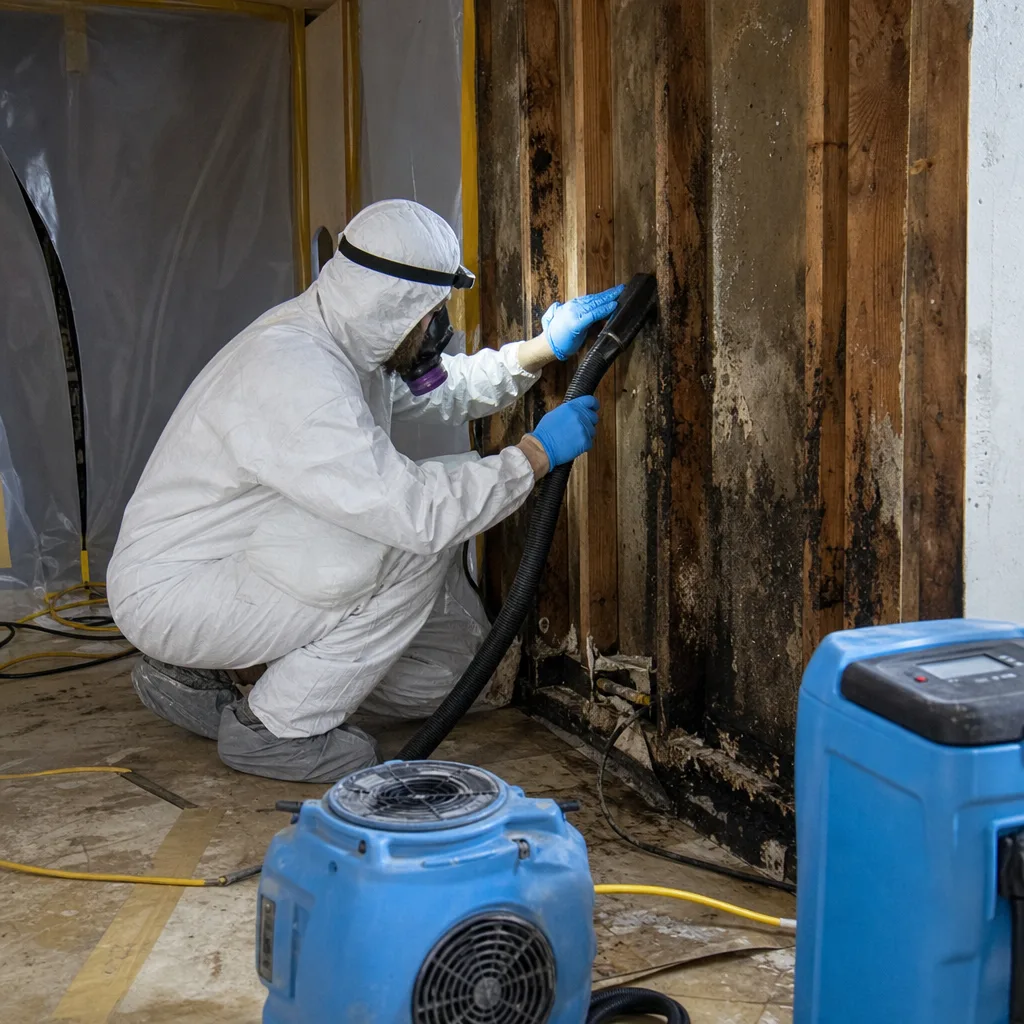
- Hiring based on response speed alone. The contractor who arrives in 20 minutes after your midnight call is often the one who skips the moisture baseline reading. In our experience, the correct response time for emergency water damage in Huntington Beach is under two hours - fast enough to prevent secondary damage, slow enough to allow proper documentation. Anyone promising instant arrival is cutting a corner somewhere.
- Accepting verbal estimates over the phone. “Probably around three thousand” is not a written price. Haven Standard, Clause 1 exists because we’ve seen verbal estimates double once the crew is inside and the homeowner feels pressured to continue. A written price before work begins protects both parties.
- Not verifying the license yourself. Contractors occasionally provide license numbers that belong to other companies, or expired licenses from previous businesses. The CSLB website takes two minutes. Use it.
- Signing blank or incomplete authorizations. Never sign a document with blank fields for “scope to be determined” or “price per insurance.” This is how $2,000 jobs become $8,000 jobs with no recourse.
- Ignoring the difference between mitigation and reconstruction. Mitigation (drying, demolition, cleaning) is urgent and billed by the day. Reconstruction (rebuilding, painting, flooring) is scheduled work with fixed pricing. A contractor who blends these phases in one vague authorization is creating confusion that benefits them at claim time. Separate them in writing.
- Assuming all IICRC certifications are equal. WRT and ASD are the core water damage certifications. A “certified technician” with only carpet cleaning credentials (CCT) is not qualified for structural drying. Verify the specific designations.
- Neglecting to document pre-existing conditions. Before any work begins, photograph your undamaged areas, your contents, your flooring. If the contractor damages something during demolition, you need evidence it was intact before they arrived. This is especially important in Huntington Beach’s older neighborhoods near downtown, where original hardwood and vintage tile are common and costly to replace.
When to Call a Professional
Call a professional restoration contractor immediately when: water has affected drywall, insulation, or flooring (not just surface water you can wipe up); you smell musty odors after previous water damage, indicating possible hidden mold; sewage or Category 3 water is involved, which requires specialized handling and health precautions; fire damage has occurred, where smoke residues continue corroding surfaces until professionally cleaned; or any water loss occurs in a home you’re planning to sell, where undisclosed damage creates liability.
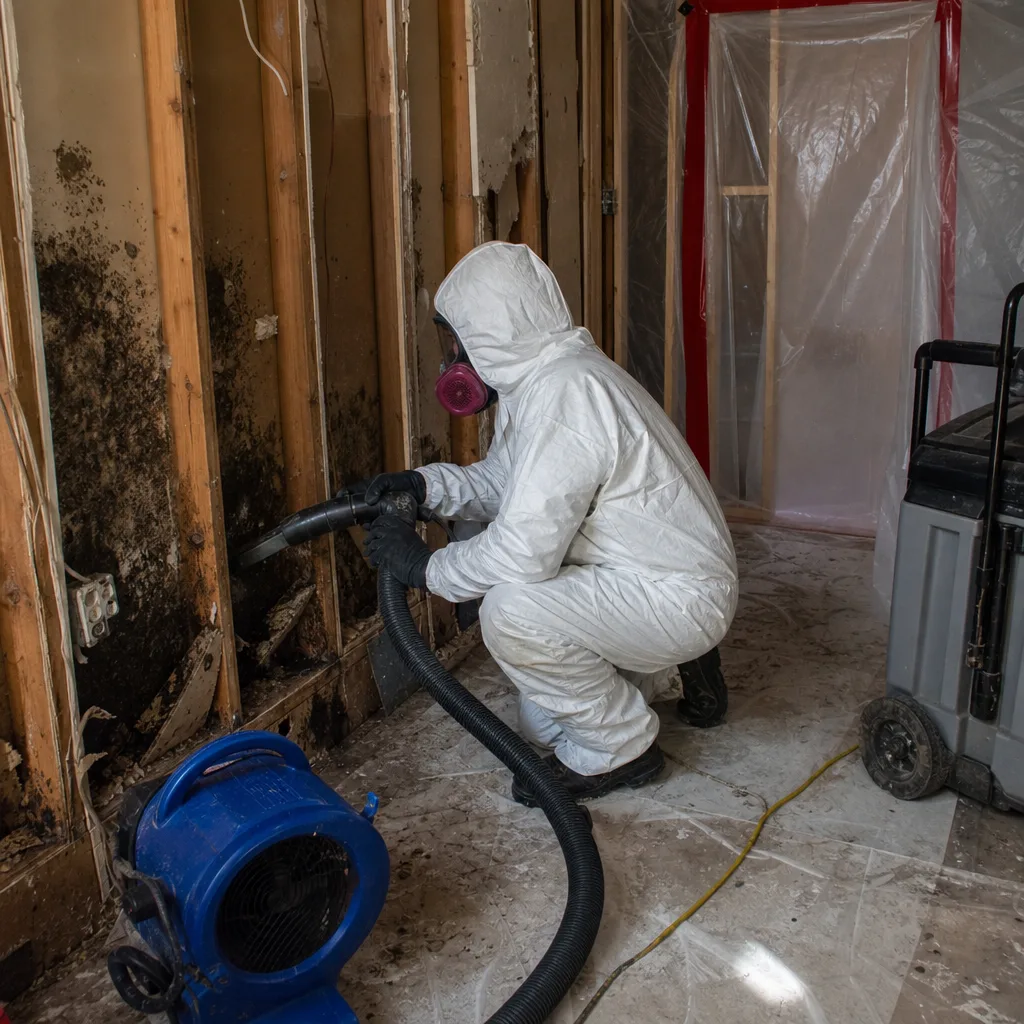
For Mold Remediation in Huntington Beach, professional assessment is particularly important due to our coastal humidity, which keeps indoor moisture elevated year-round and can sustain mold growth in wall cavities even without active leaks. If you can see mold covering more than 10 square feet, or if you smell mold but cannot locate the source, professional containment and air quality testing are warranted.
For Fire & Smoke Damage Restoration in Huntington Beach, the urgency is chemical, not just cosmetic. Smoke residues are acidic and begin etching glass and corroding metal within hours. Professional cleaning within 24-48 hours prevents permanent damage that no later intervention can reverse.
DryMark Restoration Huntington Beach offers free estimates in Huntington Beach - call (657) 288-3467. Every estimate includes a written scope, and we provide a Free Second Opinion on any competitor’s written estimate at no charge. See more guides & resources for additional homeowner tools.
Frequently Asked Questions
Water damage restoration in Huntington Beach typically ranges from $2,500 for a contained single-room drying job to $8,500+ for whole-house drying with hardwood floor rescue and pack-out services. Factors affecting price include: the category of water (Category 1 clean water costs less than Category 3 sewage), the square footage and number of affected rooms, whether specialty equipment like Injectidry hardwood floor drying mats are needed, and whether contents must be packed out and stored during drying. Reputable contractors provide line-item written estimates before work begins. Call (657) 288-3467 for an exact quote - estimates are free.
Insurance covers sudden, accidental water damage that is documented and necessary, subject to your policy limits and deductible. Coverage is denied or reduced when: the damage resulted from long-term maintenance issues (slow leaks, deteriorated caulking), the contractor cannot prove the work was necessary with baseline moisture readings and drying logs, or the billed rates exceed reasonable and customary amounts for the area. The quality of your contractor’s documentation directly determines whether your claim is paid in full. We coordinate directly with adjusters and provide claim-formatted documentation on every job.
Legitimate emergency response in Huntington Beach typically ranges from 45 minutes to two hours depending on traffic, time of day, and current demand after major weather events. Anyone promising instant arrival (under 30 minutes) is likely cutting corners on documentation or traveling without proper equipment loaded. Our live dispatch answers 24 hours a day, 7 days a week with no voicemail, and we provide realistic arrival windows we actually meet. Speed matters, but not at the cost of the moisture baseline reading your insurer requires.
For water damage affecting drywall, insulation, or subflooring, professional drying is necessary because moisture hides in wall cavities and beneath flooring where consumer equipment cannot reach. For mold, DIY cleaning is appropriate only for surface growth under 10 square feet on non-porous materials where the moisture source has been permanently fixed. Hidden mold in HVAC systems, behind drywall, or in crawl spaces requires professional containment and air filtration to prevent spore dispersal. In Huntington Beach’s humid climate, incomplete drying almost guarantees secondary mold within 30-60 days.
You retain control unless you sign an Assignment of Benefits. The correct process is: you file the claim, the contractor documents the damage and provides scope/estimate to you and your adjuster, and you approve any settlement. The contractor should coordinate directly with your adjuster for questions about methodology or pricing, but all decisions remain yours. We provide claim-formatted documentation directly to adjusters while keeping you copied on all communications, so you maintain oversight without handling technical disputes yourself.
First, stop the water source if safe to do so (shut off the main valve for plumbing leaks; do not enter standing water if electrical outlets may be submerged). Second, document everything with photos and video before moving anything - your insurer will need pre-loss condition evidence. Third, remove small valuables and electronics from affected areas. Fourth, do not use household fans on Category 2 or 3 water, as this can aerosolize contaminants. Fifth, if sewage is involved, evacuate the area and wait for professionals. Do not attempt to remove saturated drywall or insulation yourself; improper removal releases trapped moisture and mold spores into unaffected areas.
The Bottom Line
Hiring a damage restoration contractor in Huntington Beach is not about finding the fastest responder or the lowest quote. It’s about finding the contractor whose documentation process will get your claim paid. Verify the license yourself. Demand five written documents before any work begins. Reject verbal pricing and Assignment of Benefits agreements. Ask the four documentation questions by phone. The contractors who answer specifically, with reference to IICRC standards and daily moisture logging, are the ones who will protect your financial interest alongside your property.
Since 2011, we’ve built Back to Dry Restoration around this principle: a restoration invoice is only as good as the documentation behind it. Our 12,000+ restored homes share one common element - every one had a written price before work started, a photo record on every visit, and daily drying logs that turned insurance questions into insurance payments. The Haven Standard isn’t marketing language. It’s the documentation protocol that makes claims payable.
Written by Alicia Brennan, Owner at DryMark Restoration Huntington Beach, serving Huntington Beach since 2011.