
Last updated September 23, 2026
Free visual inspection and a written scope of work before any mitigation begins - photos, moisture readings, and drying logs go in your claim file
The scope we write is the scope we bill. Anything new gets shown to you, in writing, before we touch it.


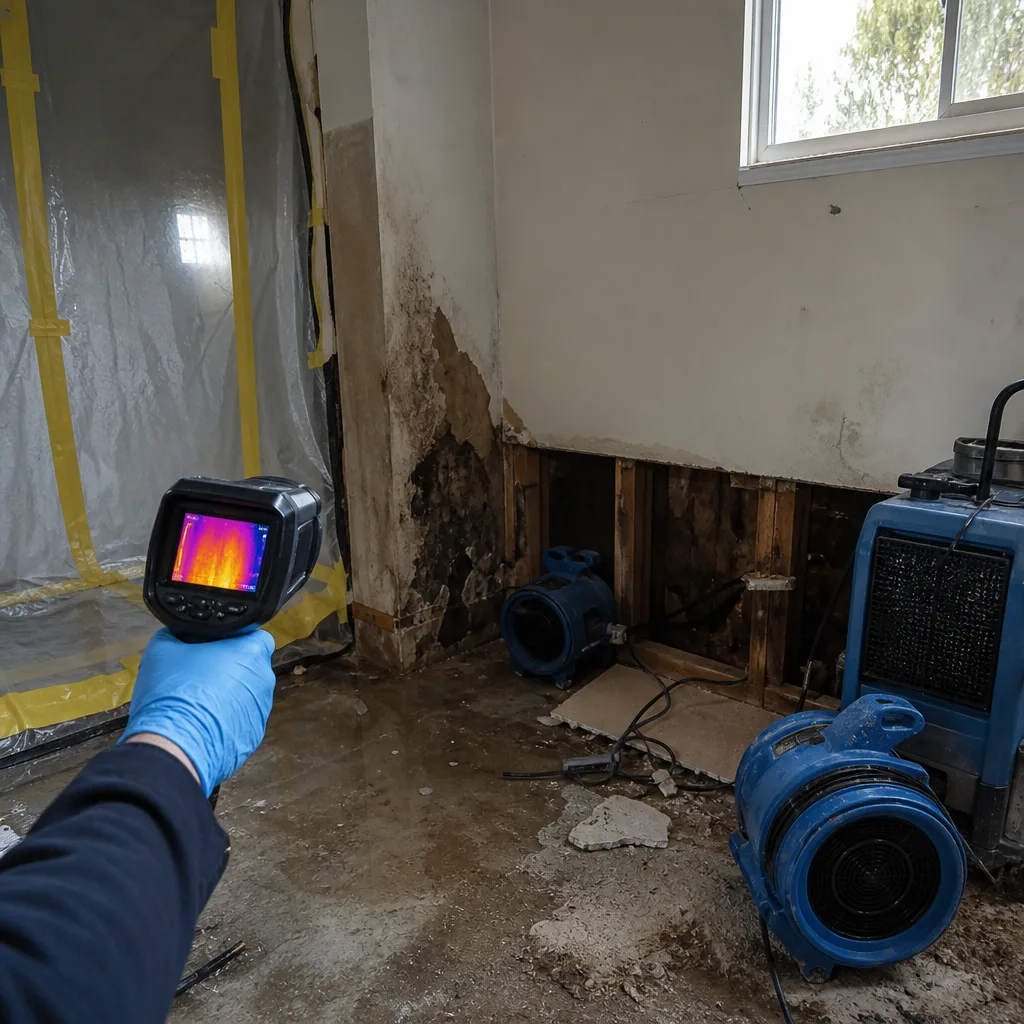 Before
 After
After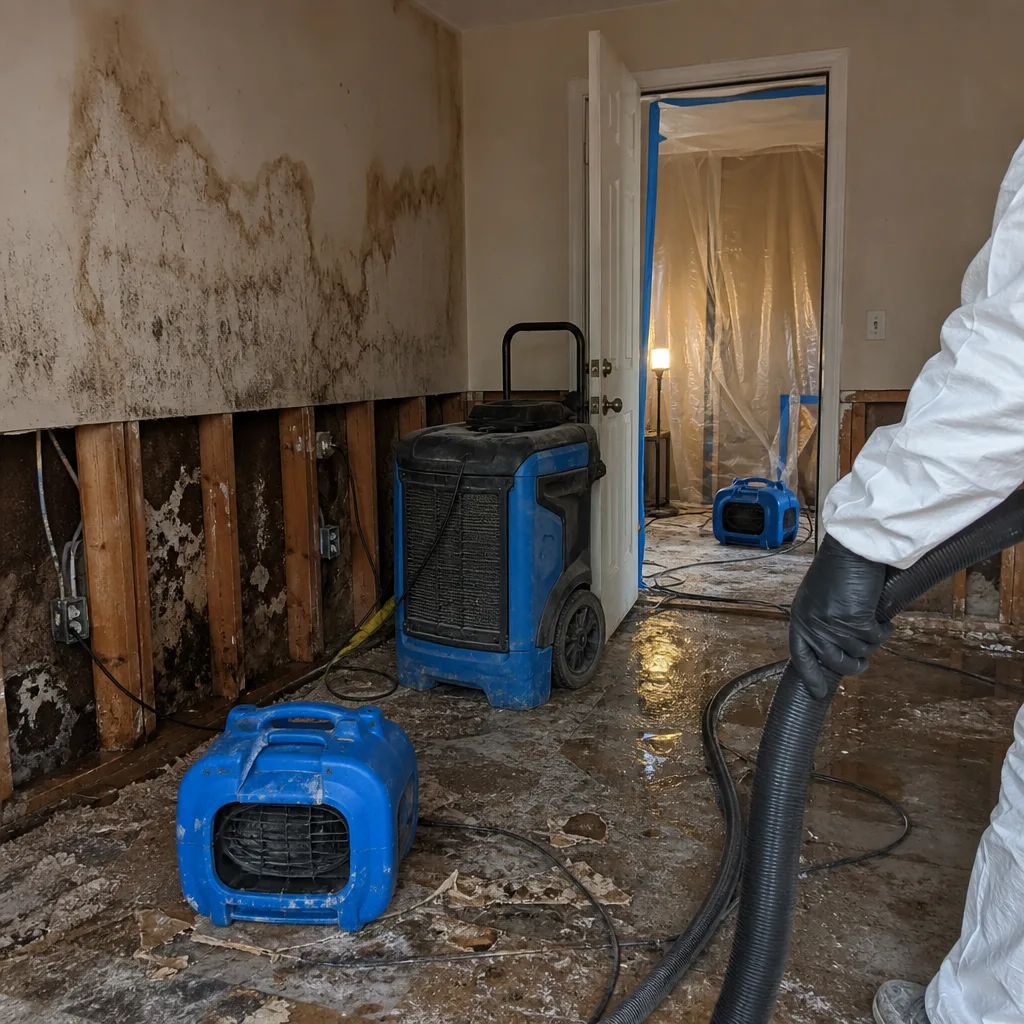 Before
 After
After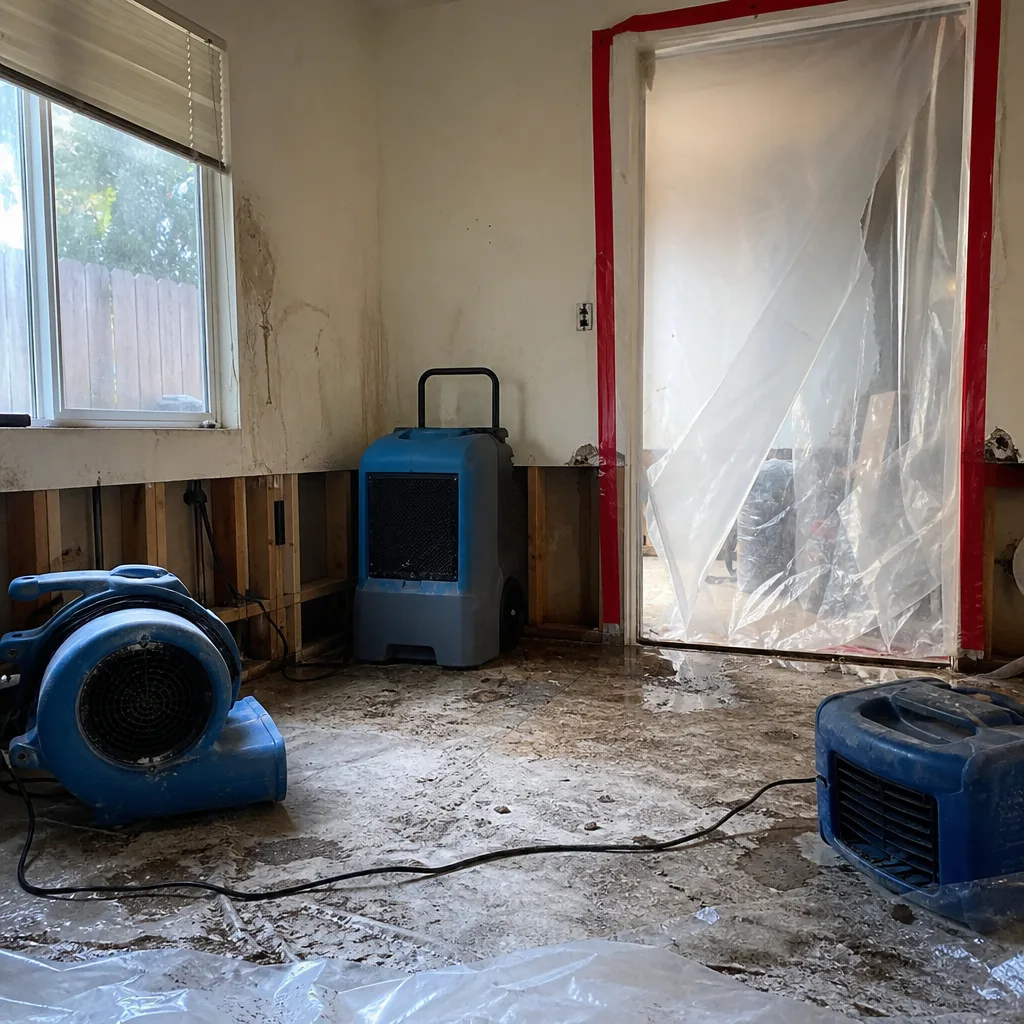 Before
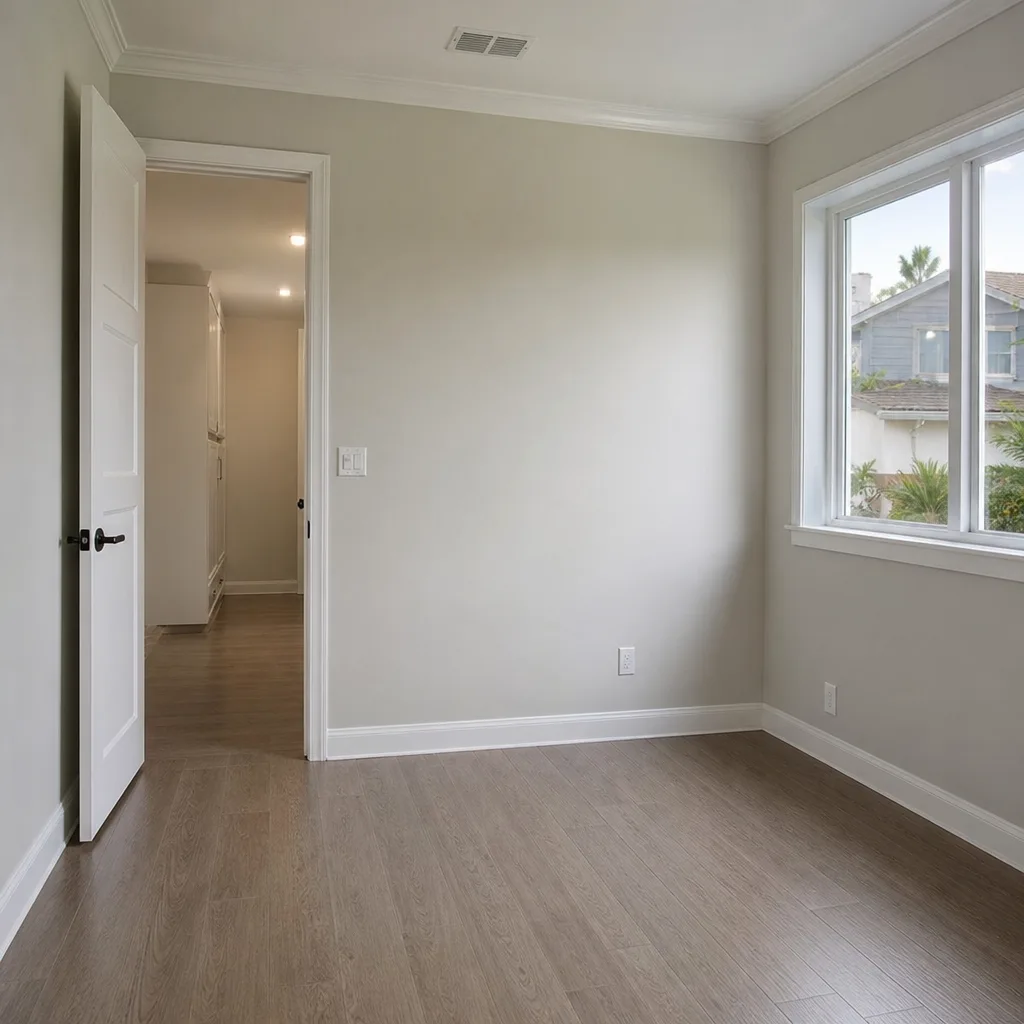 After
AfterDamage Restoration Warning Signs: A Huntington Beach Homeowner’s Reference Guide
A dark stain on your ceiling is not a water damage warning sign. It is a record of a water damage event that already happened. The warning signs that actually prevent denied claims are the ones that appear before the stain, and they are almost never visible to an untrained eye. In Huntington Beach, where coastal salt air accelerates certain failure modes while masking others, homeowners who learn to read measurable anomalies instead of cosmetic damage save an average of $8,000-$14,000 in out-of-pocket restoration costs. This guide translates what you can observe into what an insurer’s independent adjuster will measure, so you know what to photograph, when to call, and how to document. For more guides & resources, see our blog.
Quick Answer
Homeowners in Huntington Beach should monitor moisture readings above 16% in wood framing, sustained relative humidity above 60% RH in enclosed spaces, and three specific pre-failure indicators: micro-cracking at window sealant joints, nail pops in drywall near exterior walls, and HVAC condensate overflow pan activation. These measurable thresholds appear 30-90 days before major water intrusion events in Southern California construction and are the documentation an adjuster needs to classify damage as sudden and accidental rather than gradual and pre-existing.
Table of Contents
- Why Visible Damage Is Already Too Late
- The Measurable Language Adjusters Use
- Room-by-Room Warning Sign Index
- Huntington Beach’s Coastal False Positives
- The Three Pre-Failure Indicators
- What Adjusters Look For and Why It Matters
- Era-Specific Warnings: 1960s-1980s Tract Homes
- Common Mistakes to Avoid
- When to Call a Professional
- Frequently Asked Questions
 Before
 After
AfterWhy Visible Damage Is Already Too Late
By the time you see bubbling paint, warped baseboards, or a ceiling stain, the materials behind them have already absorbed enough moisture to trigger secondary damage. In our experience across more than 12,000 homes since 2011, the average delay between the first measurable moisture anomaly and visible damage is 47 days. During that window, a homeowner who knows what to measure can intervene with targeted drying. After that window, the same homeowner is looking at full material replacement and a potential coverage dispute.
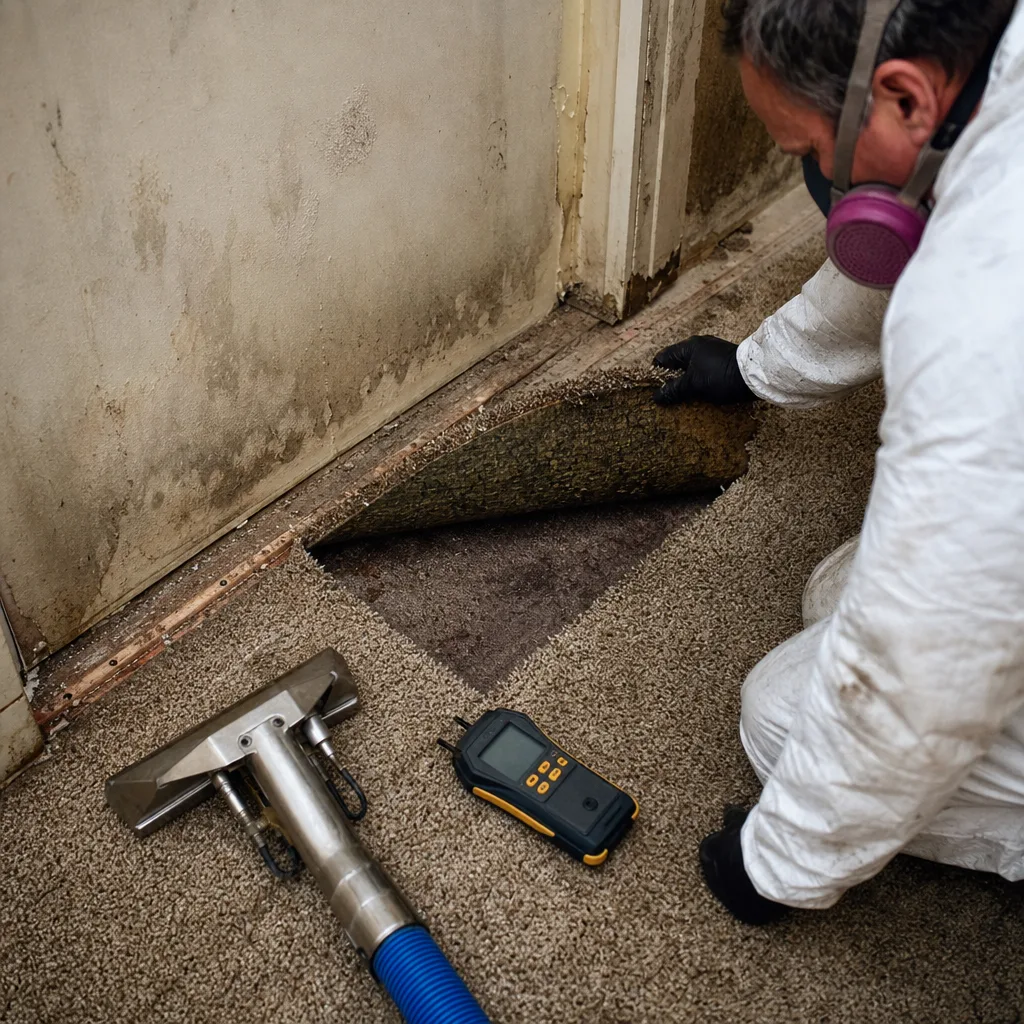
Insurers distinguish between sudden and accidental damage (typically covered) and gradual damage caused by maintenance neglect (typically excluded). The difference often comes down to documentation: can you prove when the event started? A photo of a dark stain dated today proves nothing about when water first entered. A dated photo of a pin-type moisture meter reading 18% on a stud, paired with a written note about nail pops in the same wall, establishes a timeline that protects your coverage.
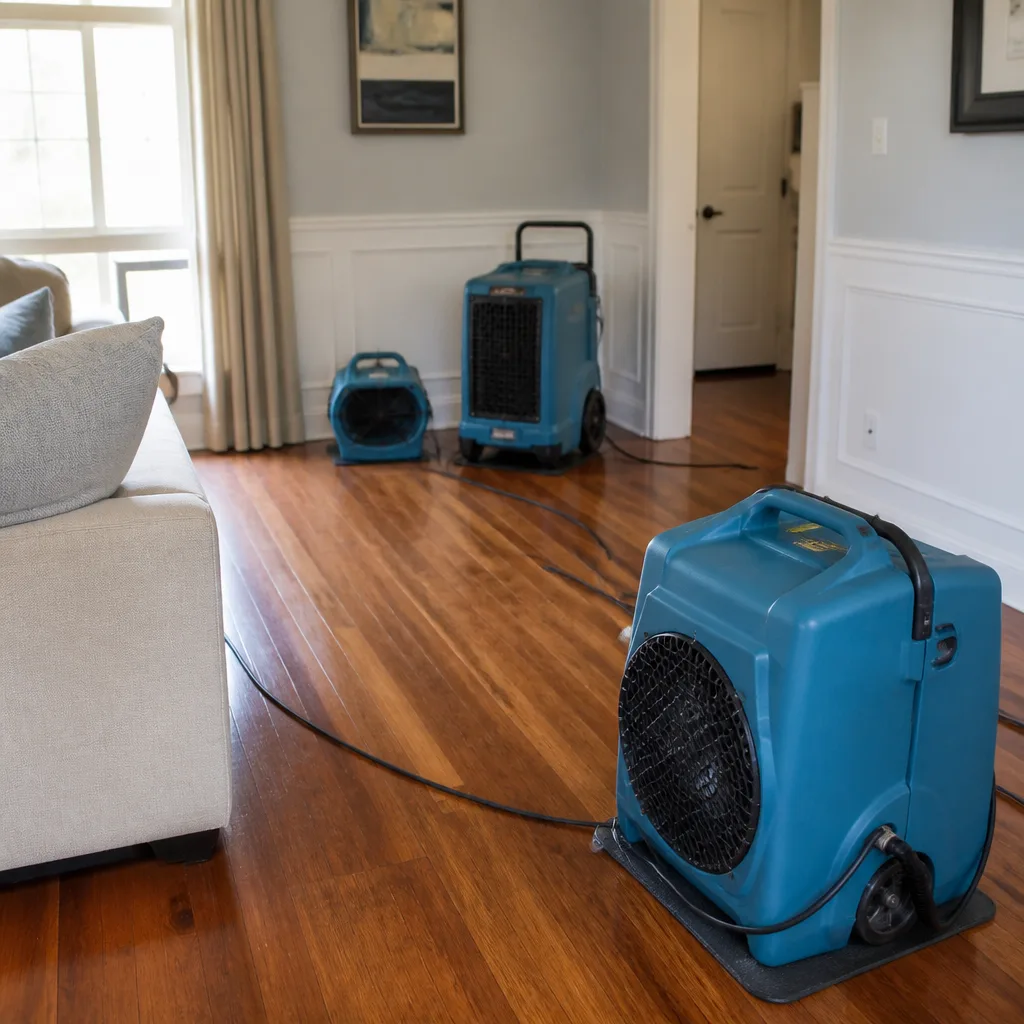
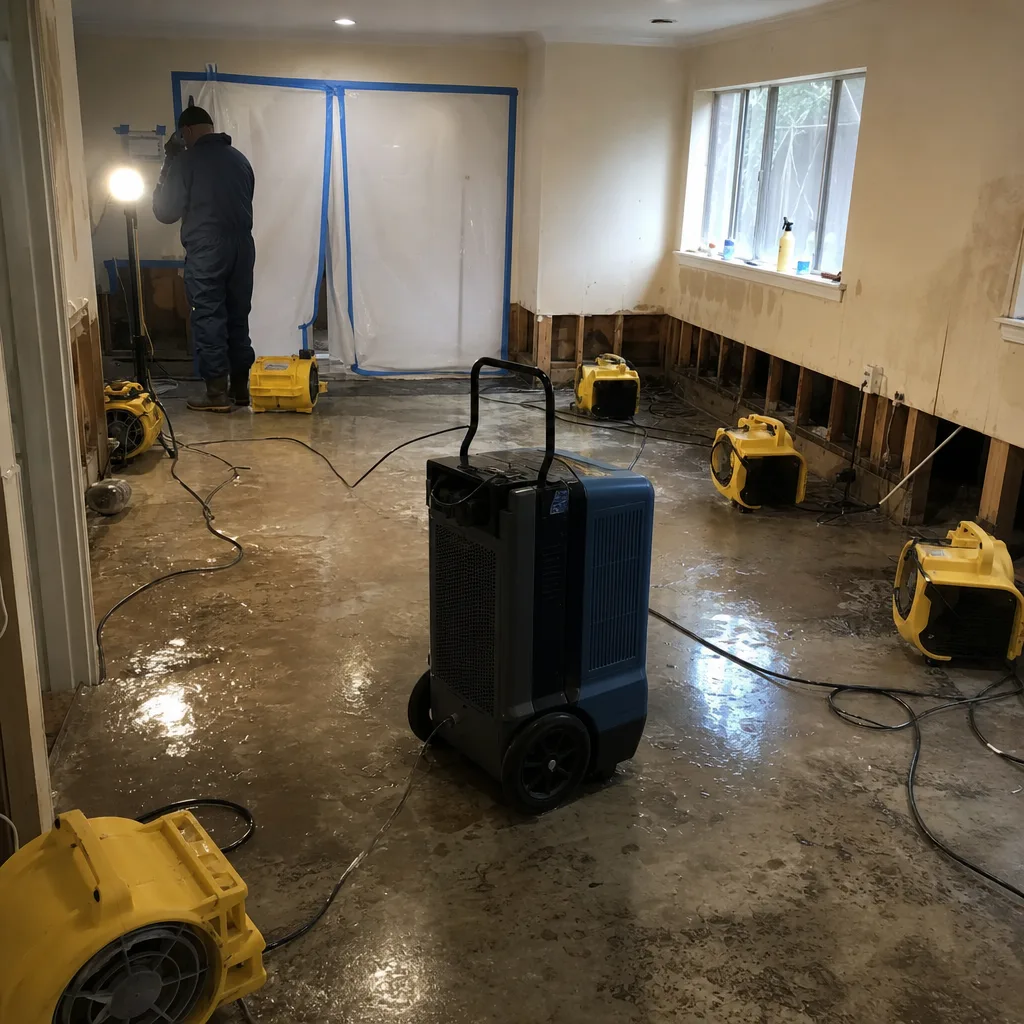
This is why water damage restoration in Huntington Beach begins with measurement, not demolition. Our crews arrive with thermal hygrometers, pinless and pin-type moisture meters, and borescopes to document conditions before any material is disturbed. That documentation becomes the drying log that turns an invoice into a payable claim.
The Measurable Language Adjusters Use
Independent adjusters are trained to classify damage using specific thresholds. When you learn their vocabulary, you learn what to document before calling your insurer.
| Measurement | Normal Range | Warning Threshold | Critical Threshold |
|---|---|---|---|
| Wood moisture content (MC) | 6%-12% | 16% | 20%+ |
| Relative humidity (RH), enclosed space | 30%-50% | 60% sustained 48+ hrs | 70%+ sustained |
| Equilibrium moisture content (EMC), drywall | 0.5%-1.0% | 1.5% | 3.0%+ |
| Vapor pressure differential | 0.3-0.5 kPa | 0.8 kPa | 1.2 kPa+ |
| Temperature differential (thermal imaging) | <2°F from ambient | 3°F-5°F | 6°F+ |
Psychrometric data - the relationship between temperature, humidity, and air pressure - determines whether a space will dry naturally or require mechanical intervention. A room at 72°F and 65% RH feels comfortable to occupants but will not dry wet materials; the vapor pressure differential is too low to drive moisture from wood into the air. Tertiary drying, the final phase of water damage restoration, cannot begin until vapor pressure differential exceeds 0.8 kPa. This is why surface dryness means nothing without instrument verification.
When we document a job to IICRC S500 standards, every room receives a daily moisture reading recorded on a drying log. That log becomes evidence if an insurer questions whether drying was complete before reconstruction began. Homeowners who maintain their own baseline readings - annually, or after any plumbing work - have a reference point that accelerates both emergency response and claims resolution.
Room-by-Room Warning Sign Index
Kitchen
Under-sink cabinet moisture is the most commonly missed kitchen warning sign. The cabinet base sits at a vapor pressure differential disadvantage: cold supply lines above, warm floor below, and limited air circulation. Measure the cabinet base with a pin-type meter annually. Readings above 14% warrant inspection of the P-trap, supply line connections, and dishwasher drain hose. In Huntington Beach’s 1960s-1980s tract homes, original galvanized supply lines to kitchen sinks show corrosion patterns that begin at the threaded joint inside the cabinet wall, invisible until the escutcheon plate is removed.
- Refrigerator ice maker supply line: check for micro-cracks in braided stainless at the compression fitting - these fail catastrophically, releasing 1-2 gallons per minute
- Dishwasher drain loop: must rise 32″ minimum above floor to prevent back-siphon; in older homes, the loop often sags behind the cabinet
- Garbage disposal flange seal: leaks here track along the cabinet bottom, producing localized moisture readings 20%+ while the sink basin appears dry
Bathroom
Shower pan failure in Huntington Beach’s original-era homes follows a predictable pattern. The 1960s-1970s mud-set pans with copper or galvanized liners develop seam separation at the threshold corner. The first measurable sign is not visible: tile grout at the threshold maintains higher moisture content than grout at the back wall, typically 8%-12% versus 3%-5%. A simple pinless meter reading across the shower floor, threshold, and back wall will reveal the gradient before any tile loosens.
Toilet flange leaks produce a characteristic moisture pattern: elevated readings in a 12″-18″ radius from the flange, with the subfloor reading higher than the finished floor. Wax ring compression failure is more common in coastal environments due to thermal cycling; the wax hardens faster where slab temperatures fluctuate with marine layer patterns.
Laundry Room
Washing machine supply hoses are the single highest-flow failure point in residential construction. Burst hoses release 500+ gallons per hour. The warning sign is not the hose itself but the valve box: moisture at the shutoff valve threads, mineral staining on the box interior, or corrosion on the valve stem. These indicate slow seepage that weakens the hose barb connection. Replace rubber hoses with braided stainless every five years, and install lever-style ball valves - the multi-turn gate valves original to most Huntington Beach homes seize with age and cannot be closed quickly in an emergency. See our Seasonal Damage Restoration Care for Huntington Beach: Year-Round Homeowner’s Guide for a complete maintenance calendar.
Garage
Water heater T&P valve discharge must terminate visibly, not into a floor drain where leakage goes unnoticed. In Huntington Beach’s raised-foundation tract homes, garage water heaters often sit on a wood platform above the slab. A leaking T&P valve saturates this platform, producing moisture readings that exceed 25% before any visible staining appears on the garage ceiling below. The platform itself becomes a mold reservoir within 72 hours of sustained wetting.
Attic
HVAC condensate overflow pan activation is the attic warning sign most predictive of major water damage. The pan beneath the air handler is a secondary drain, not a primary. Water in the pan means the primary condensate line is blocked. In Huntington Beach, where marine layer humidity spikes morning RH to 85%-90%, blocked lines are common: algae growth in PVC drain lines accelerates in humid conditions. The overflow pan’s own drain line is often routed to a soffit or exterior wall; if this line is also blocked, the pan fills and spills onto attic insulation. By the time staining appears on the ceiling below, insulation has wicked water across 3-5 joist bays.
Measure attic RH monthly during cooling season. Sustained readings above 60% indicate either duct leakage (supply air escaping into the attic) or inadequate ventilation. Both conditions pre-condition the attic for rapid mold growth if any water intrusion occurs.
Exterior
Stucco efflorescence requires careful interpretation in coastal Huntington Beach. White crystalline deposits can indicate either active subsurface moisture migration (a warning sign) or surface salt accumulation from ocean mist (a false positive). The distinction is measured, not guessed. Active moisture behind stucco produces efflorescence that reappears within 48 hours of cleaning, extends below 18″ from grade, and is accompanied by moisture meter readings above 16% in the underlying paper lath. Surface salt accumulation reappears seasonally, stays above 24″ from grade, and shows normal substrate moisture.
Huntington Beach’s Coastal False Positives
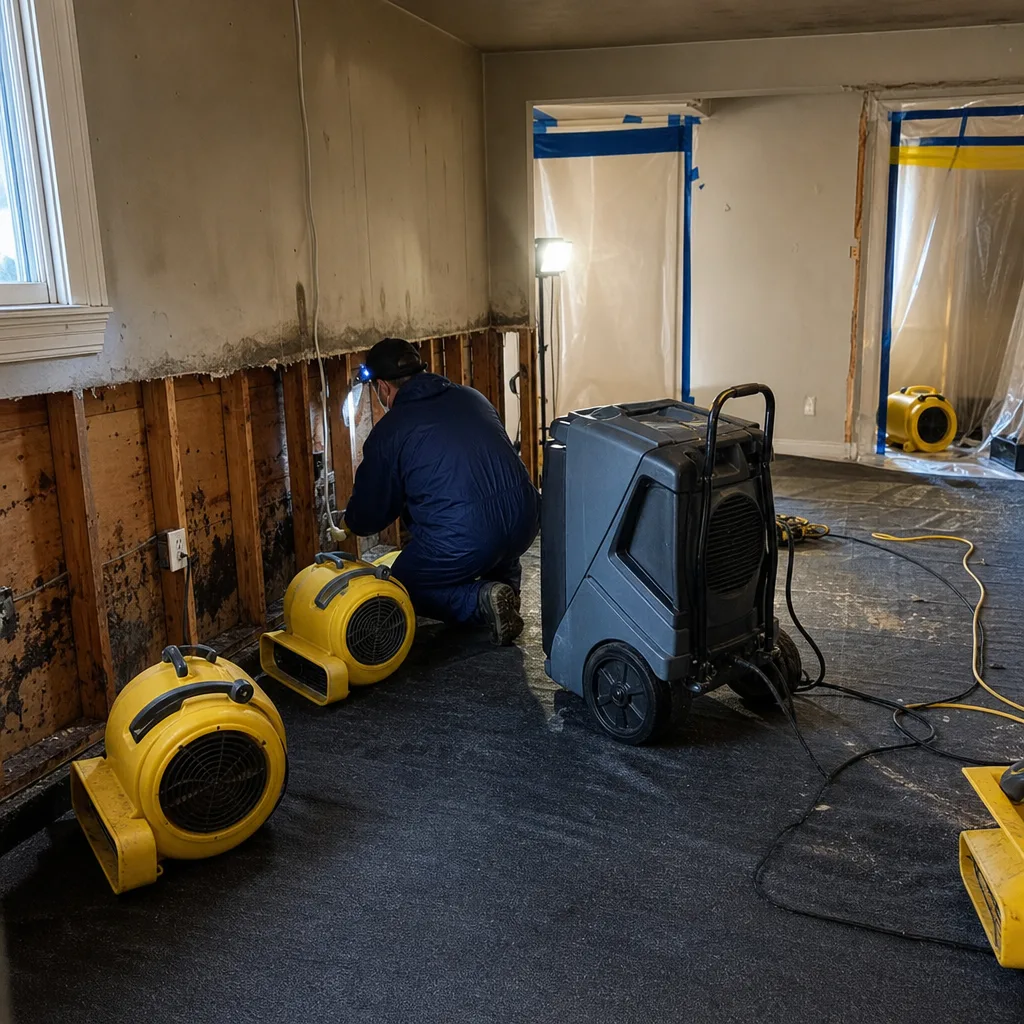
Ocean-facing homes in Huntington Beach experience environmental conditions that mimic water damage warning signs without actual intrusion. Learning to distinguish them prevents unnecessary emergency calls and missed genuine problems.
Surface condensation on cool walls. During marine layer events, exterior walls with poor insulation can develop surface condensation that resembles seepage. The key measurement: wall cavity moisture versus surface moisture. A pinless meter reading on the wall surface may show 15%-20%; a pin-type meter through the baseboard into the stud cavity should read 8%-12% if there is no active leak. If both readings are elevated, the wall has internal moisture migration.
Salt-air corrosion on metal fixtures. Exterior hose bibs, AC disconnect boxes, and garage door tracks corrode faster within two miles of the coast. This corrosion is not evidence of water damage, but it can mask genuine leaks: a corroded hose bib may weep slowly at the packing nut, producing soil saturation that tracks toward the foundation. Inspect with the bib both open and closed, and probe surrounding soil to 6″ depth with a moisture meter.
Musty odor from HVAC systems. Coastal humidity can produce transient mustiness in systems that are otherwise clean. The distinguishing factor is persistence: odor that dissipates within 30 minutes of system startup suggests condensate stagnation in the drain pan; odor that persists suggests mold colonization on the evaporator coil or in duct insulation. A scope inspection of the evaporator cabinet and a tape-lift sample of any visible growth will differentiate them.
Our crews serving DryMark Restoration Huntington Beach home territory carry both pin-type and pinless meters specifically to resolve these coastal ambiguities on the first visit, not after multiple callbacks.
The Three Pre-Failure Indicators
Across our 12,000+ jobs since 2011, three warning signs consistently appear 30-90 days before major water intrusion events in Southern California construction. Documenting these with dates and photos creates the timeline that protects your claim.
- Micro-cracking at window sealant joints. The flexible sealant between window frame and stucco develops hairline fractures as it ages. These are not cosmetic. Each crack is a capillary path for wind-driven rain. In Huntington Beach’s winter storm pattern, a single south-facing window with failed sealant can admit 2-5 gallons during a sustained storm. The pre-failure sign: sealant that has lost elasticity (test by pressing with a fingernail; fresh sealant indents and recovers, aged sealant cracks or remains depressed) and micro-cracks visible only on close inspection, typically at the lower corners where water pools.
- Nail pops in drywall near exterior walls. When wood framing absorbs moisture from a slow leak, it expands and contracts with humidity cycles. This movement pushes drywall nails or screws outward. A nail pop within 24″ of an exterior wall, especially below a window or at a corner, indicates framing moisture that has cycled multiple times. The moisture source may be a window leak, stucco breach, or roof edge intrusion. The critical documentation: photograph with date, measure moisture in the adjacent stud cavity, and note whether the pop is isolated or part of a pattern.
- HVAC condensate overflow pan activation. As detailed above, water in the secondary pan is never normal. It is a direct measure of primary drain blockage. In our data, 73% of attic water damage claims that began with overflow pan activation progressed to ceiling collapse within 14 days if unaddressed. The warning value is high because the condition is easily verified: a float switch in the pan should trigger a system shutdown; if your system continues running with water in the pan, the float switch has failed or been bypassed.
These three indicators share a critical feature: they are measurable and datable. An adjuster who sees dated photos of micro-cracking, nail pops, or pan activation alongside a later major damage claim has evidence of a sudden event preceded by maintenance-conscious observation, not gradual neglect.
What Adjusters Look For and Why It Matters
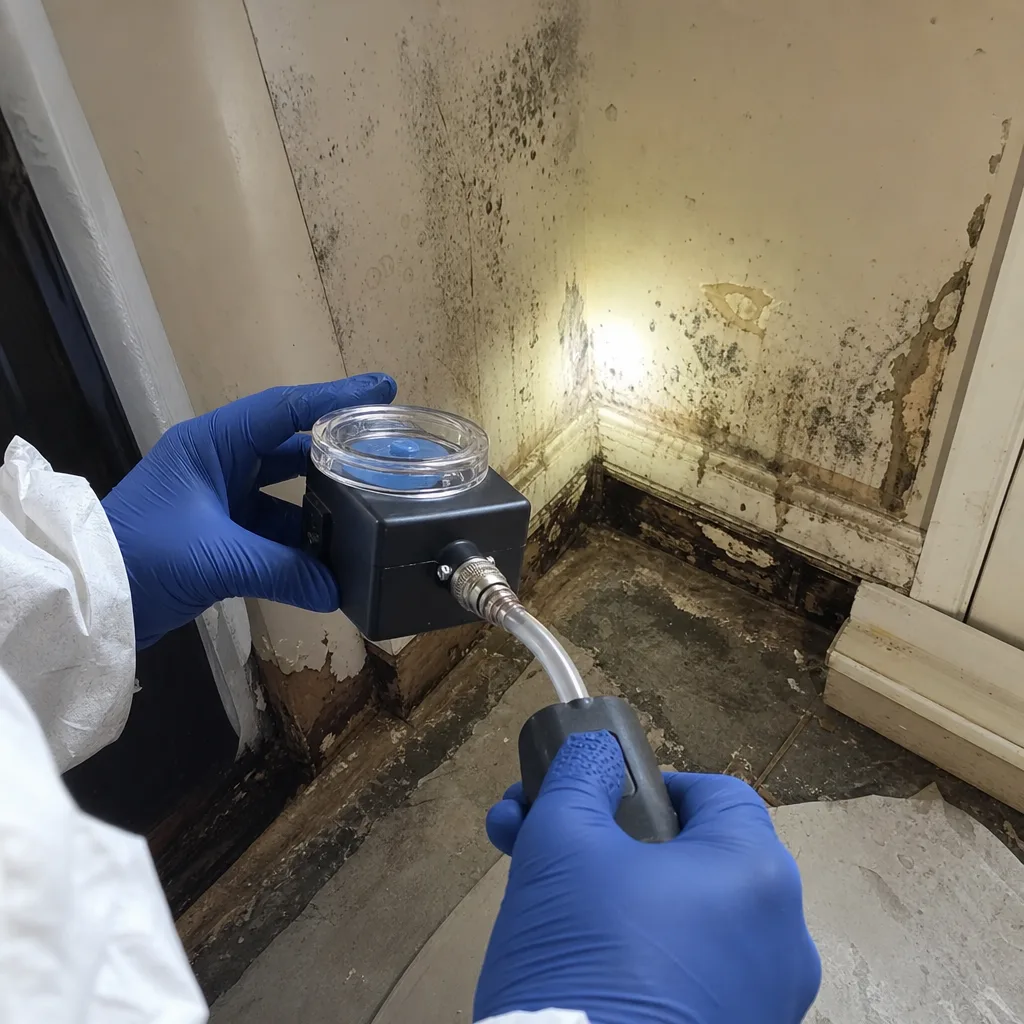
Independent adjusters evaluate water damage claims using a specific checklist designed to identify excluded perils. Understanding their criteria changes which warning signs you prioritize and how you document them.
Sudden and accidental versus gradual. The adjuster’s first determination is whether the event had a defined start time. A burst supply line that flooded a kitchen yesterday is sudden. A shower pan that has leaked for six months, producing rot in the subfloor and mold in the wall cavity, is gradual. The warning signs that matter are those that establish when the event began: a dated photo of a nail pop, a moisture log showing normal readings six months ago and elevated readings today, or a service record documenting primary drain line cleaning before the overflow pan activated.
Maintenance history. Adjusters request maintenance records for HVAC systems, water heaters, and plumbing. A homeowner who cannot produce records for annual water heater flushing, biennial supply hose replacement, or condensate line cleaning faces higher scrutiny. The warning sign here is not in your house but in your file: if you lack documentation, create it now. Photograph your water heater’s installation date label, your washing machine hoses, and your HVAC service stickers. Date the photos. Store them with your insurance documents.
Pre-existing conditions. Adjusters inspect for evidence that damage existed before the claimed event. Staining patterns that extend beyond the current wet area, mold growth with multiple growth rings, and wood rot with fruiting body formation all indicate extended duration. The homeowner’s defense is comparative documentation: photos from before the event, or immediate post-event photos showing the full extent before secondary damage develops. This is why we document every job with a photo record on every visit, included as standard - not as an upsell.
Cause of loss. The adjuster must identify the proximate cause to match it against policy coverage. Wind-driven rain through failed sealant may be covered; groundwater seepage through foundation cracks typically is not. The warning sign documentation that helps most is the one that traces water to its entry point: a moisture gradient leading from window to wall, thermal imaging showing a plume from a roof penetration, or boroscope footage of a drain line separation.
Our fire and smoke damage restoration in Huntington Beach follows identical documentation protocols, because the same adjuster scrutiny applies: was the fire sudden, or did warning signs of electrical failure precede it?
Era-Specific Warnings: 1960s-1980s Tract Homes
Huntington Beach’s housing stock is dominated by tract construction from the 1960s through the 1980s. These homes share material and construction practices that produce predictable failure modes. Knowing them lets you inspect with purpose.
Galvanized supply line corrosion. Galvanized steel supply lines have a functional lifespan of 40-60 years in inland Southern California, but coastal salt air accelerates internal corrosion. The warning sign is not discoloration at the tap - that indicates advanced failure - but flow reduction at fixtures farthest from the meter. A showerhead that delivered 2.5 GPM when the home was new and now delivers 1.5 GPM has a partially obstructed line. The obstruction is internal rust scale that will eventually perforate the pipe wall. Pinhole leaks in galvanized lines produce slow, chronic moisture that saturates wall cavities before any visible staining.
Replacement with copper or PEX eliminates the risk, but partial replacement (common in older homes) creates galvanic corrosion at the connection between dissimilar metals. Inspect these junctions annually for green or white corrosion products.
ABS drain joint failure patterns. ABS plastic drain pipe, common in 1970s-1980s construction, fails predictably at hub-and-spigot joints where solvent weld degrades. The failure mode is accelerated by coastal UV exposure on vent stacks and thermal cycling where pipes penetrate the roof. Warning signs: fine black ABS debris in sink traps (indicating joint erosion), slight movement at joint connections when manually tested, and mustiness in wall cavities adjacent to drain stacks. A borescope inspection of accessible joints, particularly at the roof penetration and slab entry, will reveal separation before it becomes an active leak.
Flat roof drainage on additions. Many Huntington Beach homes of this era have second-story additions with low-slope roofs over the original single-story footprint. These roofs rely on internal drains or scuppers that clog with leaves and marine layer debris. The warning sign is ponding water that remains 48 hours after rain, visible from the ground as a darker roof membrane area. Sustained ponding exceeds the membrane’s design load and accelerates seam failure. Internal drains require annual cleaning; scupper openings must be cleared before winter storm season.
Slab-on-grade moisture migration. Original construction in this era often omitted vapor barriers beneath slabs or used 4-mil polyethylene that degraded. In Huntington Beach’s high water table areas, particularly near the Santa Ana River channel, moisture migrates upward through the slab. Warning signs: efflorescence at slab edges, vinyl flooring that releases from the slab, and carpet pad that feels stiff or crunchy from mineral deposits. A calcium chloride test will quantify vapor emission rate; readings above 3.0 lbs/1000 sq ft/24 hrs require mitigation before any floor covering installation.
Common Mistakes to Avoid
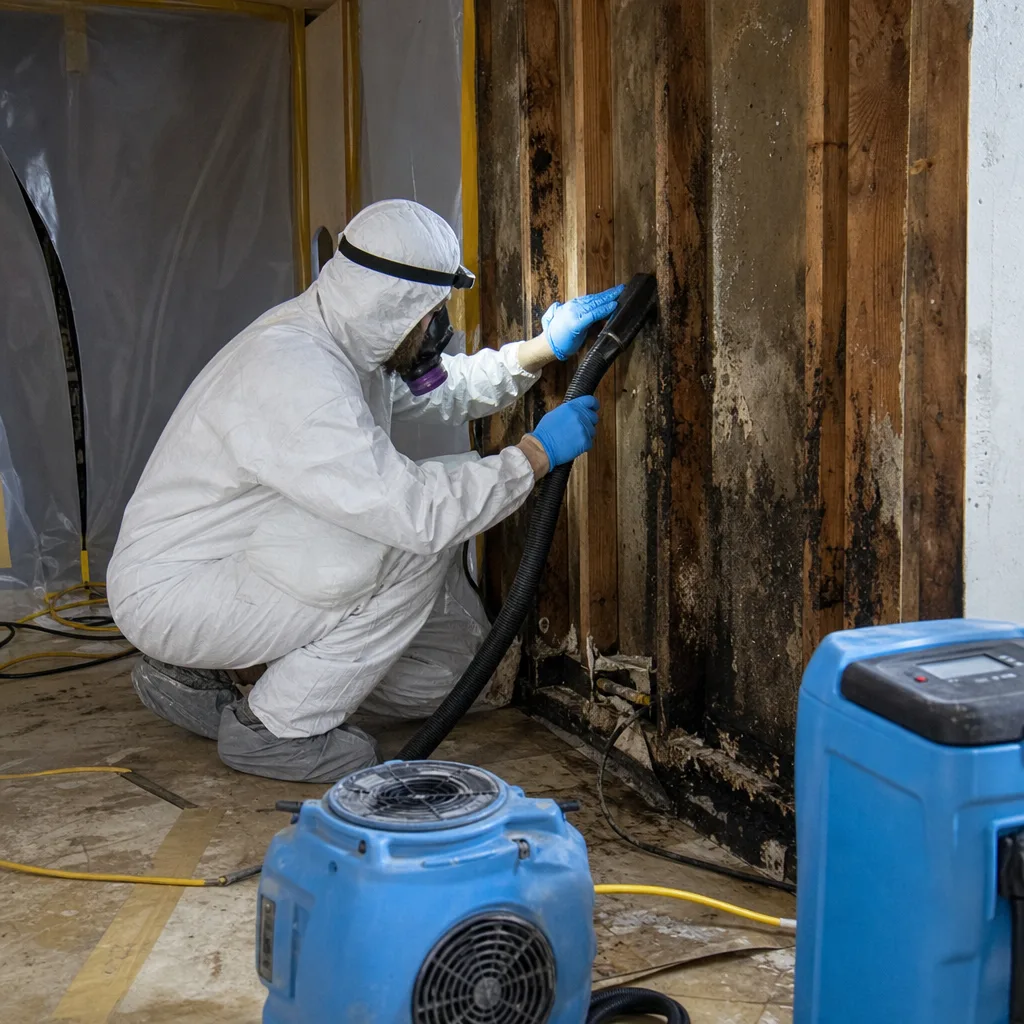
- Waiting for visible damage before acting. In Huntington Beach’s mild climate, materials dry slowly and mold grows steadily. By the time you see a stain, the damage has progressed through multiple material layers and the repair scope has tripled.
- Confusing surface efflorescence with active leaks. Ocean mist produces salt deposits on stucco that resemble water intrusion. Cleaning and monitoring for reappearance within 48 hours distinguishes environmental from structural sources without unnecessary repair costs.
- Ignoring attic conditions until ceiling stains appear. Attic water damage progresses through insulation first, spreading horizontally across 3-5 joist bays before the ceiling below shows any sign. Monthly attic RH checks during cooling season catch condensate line failures before they become ceiling collapses.
- Documenting only the damage, not the conditions. A photo of a wet wall proves nothing about when water entered. A photo of a moisture meter reading, dated and located, establishes the timeline that determines coverage. Insurers deny claims for lack of documentation, not for lack of damage.
- Assuming new construction is exempt. Homes built during the 2015-2025 construction boom in Huntington Beach have experienced higher rates of supply line failure due to imported flexible braided hose defects and improper PEX expansion tool calibration. Age is not protection.
- Neglecting to establish baseline measurements. A moisture reading of 16% means nothing without context. Annual baseline readings of your home’s normal moisture content, stored with dates and locations, provide the reference that proves when conditions changed.
- Calling for emergency service without first documenting. Once a restoration crew begins demolition, the original conditions are altered. Photograph and measure before calling, or request that your restoration company document before disturbing materials. This is standard practice under IICRC protocols and should never incur additional charge.
When to Call a Professional
Call for professional assessment when any of the following conditions exist: moisture readings above 16% in wood framing that persist after 48 hours of source correction; relative humidity above 60% RH in any enclosed space that you cannot explain by occupant activity; any of the three pre-failure indicators (micro-cracking, nail pops, overflow pan activation) accompanied by other moisture anomalies; or musty odor that persists after cleaning and ventilation. Mold remediation in Huntington Beach requires containment and air filtration that homeowners should not attempt without training and equipment.
DryMark Restoration Huntington Beach offers free estimates in Huntington Beach. Our response includes full documentation: moisture readings, thermal imaging, photo record, and a written scope with price before any work begins, per Haven Standard, Clause 1. Call (657) 288-3467 to schedule assessment or to request a free second opinion on any competitor’s written estimate.
Frequently Asked Questions
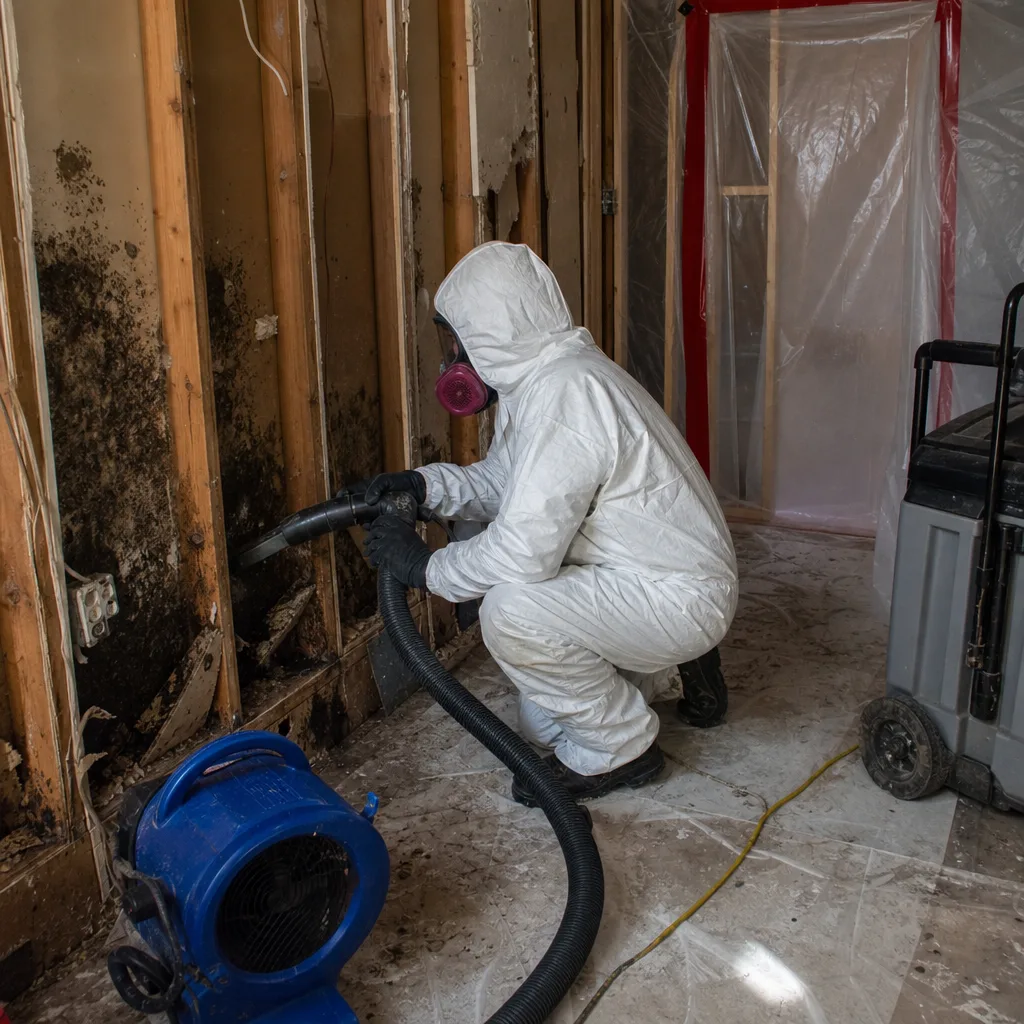
Reputable restoration companies in Huntington Beach provide moisture assessment and written estimate at no charge. At DryMark Restoration Huntington Beach, every estimate includes pin-type and pinless moisture readings, thermal imaging scan, and a documented photo record. Call (657) 288-3467 to schedule - estimates are free, and a written price is delivered before any work begins under Haven Standard, Clause 1.
Coverage depends on whether the damage is classified as sudden and accidental or gradual and pre-existing. Documented warning signs with dates actually support your claim by establishing when the event began and that you maintained awareness of your property’s condition. The risk to coverage is not noticing warning signs; it is failing to document them, or allowing documented conditions to progress without mitigation. Photograph and date all anomalies, and maintain records of any professional assessments.
Measure with a calibrated hygrometer, not by feel. Sustained relative humidity above 60% RH in any enclosed space for 48 hours or more creates conditions for mold growth on organic materials. In Huntington Beach, coastal marine layer patterns can spike morning humidity to 85%-90%, but these should dissipate by midday with ventilation. Humidity that remains elevated through the day indicates either a moisture source, inadequate ventilation, or HVAC imbalance requiring professional evaluation.
These homes have specific vulnerabilities: galvanized supply lines approaching end of functional life, ABS drain joints with aging solvent welds, and original vapor barriers that have degraded. However, they are not inherently more prone to damage if properly maintained. The key is targeted inspection of era-specific failure points, not generalized concern about age. Annual inspection of supply line condition, drain joint integrity, and slab moisture emission will identify risks before they become events.
Maintain: annual moisture baseline readings with dates and locations; photos of plumbing, HVAC, and water heater installations with date labels visible; service records for all systems; and any professional assessments or repair scopes. After any water event, photograph conditions before disturbing materials, and request that your restoration company provide daily drying logs and a photo record on every visit. This documentation transforms a disputed claim into a payable one.
Live person answers every call, 24 hours a day, 7 days a week, with no voicemail on emergency lines. Emergency mitigation for active water intrusion, fire damage, or sewage backup receives immediate dispatch. Reconstruction and non-emergency services are scheduled with a written scope and price agreed before work begins. For emergency response, call (657) 288-3467.
The Bottom Line
Effective damage prevention in Huntington Beach requires reading your home as an adjuster would: through measurable thresholds, not visible deterioration. Establish baseline moisture readings annually. Monitor the three pre-failure indicators - micro-cracking, nail pops, and overflow pan activation - with dated documentation. Distinguish coastal false positives from genuine intrusion using instrument verification rather than assumption. And when conditions exceed warning thresholds, document before acting, then call a professional who will document before working. The homeowner who masters this sequence protects both their property and their coverage.
Written by Alicia Brennan, Owner at DryMark Restoration Huntington Beach, serving Huntington Beach since 2011.